mirror of
https://github.com/zebrajr/pytorch.git
synced 2025-12-07 00:21:07 +01:00
 26d54b4076
Summary:
This adds argument names and docstrings so the docs are a lot more understandable.
Pull Request resolved: https://github.com/pytorch/pytorch/pull/71481
Test Plan:
docs/tests CI should suffice
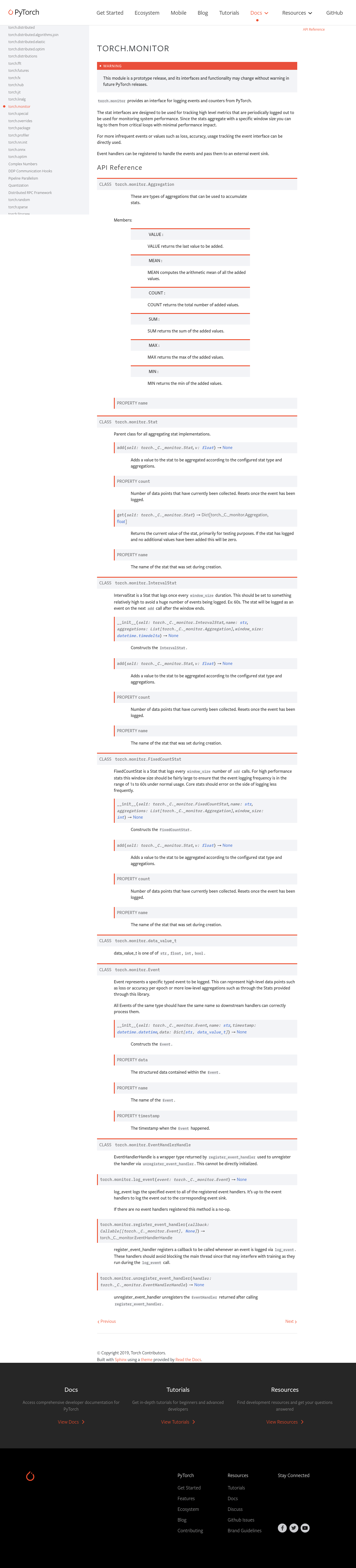
Reviewed By: edward-io
Differential Revision: D33661255
Pulled By: d4l3k
fbshipit-source-id: 686835dfe331b92a51f4409ec37f8ee6211e49d3
(cherry picked from commit 0a6accda1b)

315 lines
9.3 KiB
C++
315 lines
9.3 KiB
C++
#include <utility>
|
|
|
|
#include <torch/csrc/utils/pybind.h>
|
|
#include <torch/csrc/utils/python_arg_parser.h>
|
|
#include <torch/csrc/utils/python_numbers.h>
|
|
#include <torch/csrc/utils/python_strings.h>
|
|
|
|
#include <pybind11/chrono.h>
|
|
#include <pybind11/functional.h>
|
|
#include <pybind11/operators.h>
|
|
#include <pybind11/stl.h>
|
|
|
|
#include <torch/csrc/monitor/counters.h>
|
|
#include <torch/csrc/monitor/events.h>
|
|
|
|
namespace pybind11 {
|
|
namespace detail {
|
|
template <>
|
|
struct type_caster<torch::monitor::data_value_t> {
|
|
public:
|
|
PYBIND11_TYPE_CASTER(torch::monitor::data_value_t, _("data_value_t"));
|
|
|
|
// Python -> C++
|
|
bool load(handle src, bool) {
|
|
PyObject* source = src.ptr();
|
|
if (THPUtils_checkLong(source)) {
|
|
this->value = THPUtils_unpackLong(source);
|
|
} else if (THPUtils_checkDouble(source)) {
|
|
this->value = THPUtils_unpackDouble(source);
|
|
} else if (THPUtils_checkString(source)) {
|
|
this->value = THPUtils_unpackString(source);
|
|
} else if (PyBool_Check(source)) {
|
|
this->value = THPUtils_unpackBool(source);
|
|
} else {
|
|
return false;
|
|
}
|
|
return !PyErr_Occurred();
|
|
}
|
|
|
|
// C++ -> Python
|
|
static handle cast(
|
|
torch::monitor::data_value_t src,
|
|
return_value_policy /* policy */,
|
|
handle /* parent */) {
|
|
if (c10::holds_alternative<double>(src)) {
|
|
return PyFloat_FromDouble(c10::get<double>(src));
|
|
} else if (c10::holds_alternative<int64_t>(src)) {
|
|
return THPUtils_packInt64(c10::get<int64_t>(src));
|
|
} else if (c10::holds_alternative<bool>(src)) {
|
|
if (c10::get<bool>(src)) {
|
|
Py_RETURN_TRUE;
|
|
} else {
|
|
Py_RETURN_FALSE;
|
|
}
|
|
} else if (c10::holds_alternative<std::string>(src)) {
|
|
std::string str = c10::get<std::string>(src);
|
|
return THPUtils_packString(str);
|
|
}
|
|
throw std::runtime_error("unknown data_value_t type");
|
|
}
|
|
};
|
|
} // namespace detail
|
|
} // namespace pybind11
|
|
|
|
namespace torch {
|
|
namespace monitor {
|
|
|
|
namespace {
|
|
class PythonEventHandler : public EventHandler {
|
|
public:
|
|
explicit PythonEventHandler(std::function<void(const Event&)> handler)
|
|
: handler_(std::move(handler)) {}
|
|
|
|
void handle(const Event& e) override {
|
|
handler_(e);
|
|
}
|
|
|
|
private:
|
|
std::function<void(const Event&)> handler_;
|
|
};
|
|
} // namespace
|
|
|
|
void initMonitorBindings(PyObject* module) {
|
|
auto rootModule = py::handle(module).cast<py::module>();
|
|
|
|
auto m = rootModule.def_submodule("_monitor");
|
|
|
|
py::enum_<Aggregation>(
|
|
m,
|
|
"Aggregation",
|
|
R"DOC(
|
|
These are types of aggregations that can be used to accumulate stats.
|
|
)DOC")
|
|
.value(
|
|
"VALUE",
|
|
Aggregation::NONE,
|
|
R"DOC(
|
|
VALUE returns the last value to be added.
|
|
)DOC")
|
|
.value(
|
|
"MEAN",
|
|
Aggregation::MEAN,
|
|
R"DOC(
|
|
MEAN computes the arithmetic mean of all the added values.
|
|
)DOC")
|
|
.value(
|
|
"COUNT",
|
|
Aggregation::COUNT,
|
|
R"DOC(
|
|
COUNT returns the total number of added values.
|
|
)DOC")
|
|
.value(
|
|
"SUM",
|
|
Aggregation::SUM,
|
|
R"DOC(
|
|
SUM returns the sum of the added values.
|
|
)DOC")
|
|
.value(
|
|
"MAX",
|
|
Aggregation::MAX,
|
|
R"DOC(
|
|
MAX returns the max of the added values.
|
|
)DOC")
|
|
.value(
|
|
"MIN",
|
|
Aggregation::MIN,
|
|
R"DOC(
|
|
MIN returns the min of the added values.
|
|
)DOC")
|
|
.export_values();
|
|
|
|
py::class_<Stat<double>>(
|
|
m,
|
|
"Stat",
|
|
R"DOC(
|
|
Parent class for all aggregating stat implementations.
|
|
)DOC")
|
|
.def(
|
|
"add",
|
|
&Stat<double>::add,
|
|
py::arg("v"),
|
|
R"DOC(
|
|
Adds a value to the stat to be aggregated according to the
|
|
configured stat type and aggregations.
|
|
)DOC")
|
|
.def(
|
|
"get",
|
|
&Stat<double>::get,
|
|
R"DOC(
|
|
Returns the current value of the stat, primarily for testing
|
|
purposes. If the stat has logged and no additional values have been
|
|
added this will be zero.
|
|
)DOC")
|
|
.def_property_readonly(
|
|
"name",
|
|
&Stat<double>::name,
|
|
R"DOC(
|
|
The name of the stat that was set during creation.
|
|
)DOC")
|
|
.def_property_readonly(
|
|
"count",
|
|
&Stat<double>::count,
|
|
R"DOC(
|
|
Number of data points that have currently been collected. Resets
|
|
once the event has been logged.
|
|
)DOC");
|
|
|
|
py::class_<IntervalStat<double>, Stat<double>>(
|
|
m,
|
|
"IntervalStat",
|
|
R"DOC(
|
|
IntervalStat is a Stat that logs once every ``window_size`` duration. This
|
|
should be set to something relatively high to avoid a huge number of
|
|
events being logged. Ex: 60s.
|
|
The stat will be logged as an event on the next ``add`` call after the
|
|
window ends.
|
|
)DOC")
|
|
.def(
|
|
py::init<
|
|
std::string,
|
|
std::vector<Aggregation>,
|
|
std::chrono::milliseconds>(),
|
|
py::arg("name"),
|
|
py::arg("aggregations"),
|
|
py::arg("window_size"),
|
|
R"DOC(
|
|
Constructs the ``IntervalStat``.
|
|
)DOC");
|
|
|
|
py::class_<FixedCountStat<double>, Stat<double>>(
|
|
m,
|
|
"FixedCountStat",
|
|
R"DOC(
|
|
FixedCountStat is a Stat that logs every ``window_size`` number of
|
|
``add`` calls. For high performance stats this window size should be
|
|
fairly large to ensure that the event logging frequency is in the range
|
|
of 1s to 60s under normal usage. Core stats should error on the side of
|
|
logging less frequently.
|
|
)DOC")
|
|
.def(
|
|
py::init<std::string, std::vector<Aggregation>, int64_t>(),
|
|
py::arg("name"),
|
|
py::arg("aggregations"),
|
|
py::arg("window_size"),
|
|
R"DOC(
|
|
Constructs the ``FixedCountStat``.
|
|
)DOC");
|
|
|
|
py::class_<Event>(
|
|
m,
|
|
"Event",
|
|
R"DOC(
|
|
Event represents a specific typed event to be logged. This can represent
|
|
high-level data points such as loss or accuracy per epoch or more
|
|
low-level aggregations such as through the Stats provided through this
|
|
library.
|
|
|
|
All Events of the same type should have the same name so downstream
|
|
handlers can correctly process them.
|
|
)DOC")
|
|
.def(
|
|
py::init([](const std::string& name,
|
|
std::chrono::system_clock::time_point timestamp,
|
|
std::unordered_map<std::string, data_value_t> data) {
|
|
Event e;
|
|
e.name = name;
|
|
e.timestamp = timestamp;
|
|
e.data = data;
|
|
return e;
|
|
}),
|
|
py::arg("name"),
|
|
py::arg("timestamp"),
|
|
py::arg("data"),
|
|
R"DOC(
|
|
Constructs the ``Event``.
|
|
)DOC")
|
|
.def_readwrite(
|
|
"name",
|
|
&Event::name,
|
|
R"DOC(
|
|
The name of the ``Event``.
|
|
)DOC")
|
|
.def_readwrite(
|
|
"timestamp",
|
|
&Event::timestamp,
|
|
R"DOC(
|
|
The timestamp when the ``Event`` happened.
|
|
)DOC")
|
|
.def_readwrite(
|
|
"data",
|
|
&Event::data,
|
|
R"DOC(
|
|
The structured data contained within the ``Event``.
|
|
)DOC");
|
|
|
|
m.def(
|
|
"log_event",
|
|
&logEvent,
|
|
py::arg("event"),
|
|
R"DOC(
|
|
log_event logs the specified event to all of the registered event
|
|
handlers. It's up to the event handlers to log the event out to the
|
|
corresponding event sink.
|
|
|
|
If there are no event handlers registered this method is a no-op.
|
|
)DOC");
|
|
|
|
py::class_<data_value_t> dataClass(
|
|
m,
|
|
"data_value_t",
|
|
R"DOC(
|
|
data_value_t is one of of ``str``, ``float``, ``int``, ``bool``.
|
|
)DOC");
|
|
|
|
py::implicitly_convertible<std::string, data_value_t>();
|
|
py::implicitly_convertible<double, data_value_t>();
|
|
py::implicitly_convertible<int64_t, data_value_t>();
|
|
py::implicitly_convertible<bool, data_value_t>();
|
|
|
|
py::class_<PythonEventHandler, std::shared_ptr<PythonEventHandler>>
|
|
eventHandlerClass(m, "EventHandlerHandle", R"DOC(
|
|
EventHandlerHandle is a wrapper type returned by
|
|
``register_event_handler`` used to unregister the handler via
|
|
``unregister_event_handler``. This cannot be directly initialized.
|
|
)DOC");
|
|
m.def(
|
|
"register_event_handler",
|
|
[](std::function<void(const Event&)> f) {
|
|
auto handler = std::make_shared<PythonEventHandler>(f);
|
|
registerEventHandler(handler);
|
|
return handler;
|
|
},
|
|
py::arg("callback"),
|
|
R"DOC(
|
|
register_event_handler registers a callback to be called whenever an
|
|
event is logged via ``log_event``. These handlers should avoid blocking
|
|
the main thread since that may interfere with training as they run
|
|
during the ``log_event`` call.
|
|
)DOC");
|
|
m.def(
|
|
"unregister_event_handler",
|
|
[](std::shared_ptr<PythonEventHandler> handler) {
|
|
unregisterEventHandler(handler);
|
|
},
|
|
py::arg("handler"),
|
|
R"DOC(
|
|
unregister_event_handler unregisters the ``EventHandlerHandle`` returned
|
|
after calling ``register_event_handler``. After this returns the event
|
|
handler will no longer receive events.
|
|
)DOC");
|
|
}
|
|
|
|
} // namespace monitor
|
|
} // namespace torch
|