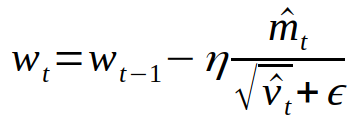
Starts addressing #106802
This PR also conveniently does some BE:
- Fixes a bug in adamw where we use amsgrad instead of per group amsgrad
- Brings the impls of adamw and adam closer to correctness and to each other
I couldn't fully remove the .pyi's because mypy was going to complain about the entire files which scared me and shouldn't go in this PR anyway.
Test plan:
- Add tests to ensure that lr could be passed as a Tensor
- Did some profiling of the below code (runs 1k iterations of step for Adam)
```
import torch
from torch.testing._internal.common_utils import TestCase
param = torch.rand(2, 3, dtype=torch.float, device='cuda:0', requires_grad=True)
param.grad = torch.rand_like(param)
lr = torch.tensor(.001, device='cuda:0')
opt = torch.optim.Adam([param], lr=lr, fused=True)
with torch.profiler.profile(
activities=[
torch.profiler.ProfilerActivity.CPU,
torch.profiler.ProfilerActivity.CUDA,
]
) as p:
for _ in range(1000):
opt.step()
print(p.key_averages().table(sort_by="cpu_time_total"))
```
Before my change:
<img width="1381" alt="image" src="https://github.com/pytorch/pytorch/assets/31798555/cfc5175a-0f41-4829-941f-342554f3b152">
After my change (notice there are no d2h syncs and the CPU time is lower!):

Next steps long term:
- have all capturable foreach + forloop impls in Adam(W) handle tensor LR
- have all capturable impls handle tensor LR
- have all impls handle tensor LR
Pull Request resolved: https://github.com/pytorch/pytorch/pull/106916
Approved by: https://github.com/albanD
There are extra graph compilations on XLA when beta{1,2} ** step get too small. This PR addresses this issue by making the `capturable` interface enabled for XLA, as well as switching to `torch.float_power` which preserves the same behaviour as the non-capturable flow on XLA.
Pull Request resolved: https://github.com/pytorch/pytorch/pull/102858
Approved by: https://github.com/janeyx99, https://github.com/albanD
The goal is to fix the problem from https://github.com/pytorch/pytorch/pull/102858

The full error this used to raise was :
```
2023-06-27T15:12:15.0663239Z   File "/opt/conda/envs/py_3.10/lib/python3.10/site-packages/torch/optim/adamw.py", line 409, in _single_tensor_adamw
2023-06-27T15:12:15.0663699Z     bias_correction1 = 1 - beta1 ** step
2023-06-27T15:12:15.0664200Z   File "/opt/conda/envs/py_3.10/lib/python3.10/site-packages/torch/_tensor.py", line 40, in wrapped
2023-06-27T15:12:15.0664547Z     return f(*args, **kwargs)
2023-06-27T15:12:15.0665031Z   File "/opt/conda/envs/py_3.10/lib/python3.10/site-packages/torch/_tensor.py", line 882, in __rpow__
2023-06-27T15:12:15.0665483Z     return torch.tensor(other, dtype=dtype, device=self.device) ** self
2023-06-27T15:12:15.0665899Z RuntimeError: CUDA error: operation not permitted when stream is capturing
2023-06-27T15:12:15.0666401Z CUDA kernel errors might be asynchronously reported at some other API call, so the stacktrace below might be incorrect.
```

This pow issue was fixed in https://github.com/pytorch/pytorch/pull/104264 and so this problem should be solvable now.
Pull Request resolved: https://github.com/pytorch/pytorch/pull/104254
Approved by: https://github.com/janeyx99, https://github.com/aws-murandoo
This is a reland of https://github.com/pytorch/pytorch/pull/100007 with a build fix for Windows debug builds.
`at::native::ParamsHash` only works on structs with standard layout, but `std::string` isn't one in Visual C++ debug builds, which one can easily verified by running something like:
```cpp
#define _DEBUG
#include <type_traits>
#include <string>
static_assert(std::is_standard_layout_v<std::string>, "Oh noes");
```
If above conditon is not met, instead of printing a static_assert output, VC++ raises a very cryptic compilation errors,  see https://github.com/pytorch/pytorch/pull/100007#discussion_r1227116292 for more detail.

Also, using `std::hash` for string should result in a faster hash function.

(cherry picked from commit 74b7a6c75e)

<!--
copilot:summary
-->
### <samp>🤖 Generated by Copilot at 5914771</samp>

This pull request introduces a new function `_group_tensors_by_device_and_dtype` that can group tensors by their device and dtype, and updates the `foreach` utilities and several optimizers to use this function. The goal is to improve the performance, readability, and compatibility of the code that handles tensors with different properties. The pull request also adds a test case and type annotations for the new function, and some error checks for the `fused` argument in Adam and AdamW.
Pull Request resolved: https://github.com/pytorch/pytorch/pull/103912
Approved by: https://github.com/janeyx99
Fixes#95781.
The cause seems to be that the current implementation doesn't correctly pass `found_inf` when `grad_scale` is `None`. Therefore parameters can get mistakenly updated by gradients whose some elements are invalid, i.e. nan or inf.
Related #94060
I forgot about this wrong handling after #94344
Pull Request resolved: https://github.com/pytorch/pytorch/pull/95847
Approved by: https://github.com/janeyx99
Big OOP correction continued. Also added a test this time to verify the defaulting was as expected.

The key here is realizing that the grouping for foreach already assumes that the non-param tensorlists follow suit in dtype and device, so it is too narrow to check that _all_ tensors were on CUDA. The main leeway this allowed was state_steps, which are sometimes cpu tensors. Since foreach _can_ handle cpu tensors, this should not introduce breakage.

Pull Request resolved: https://github.com/pytorch/pytorch/pull/95820
Approved by: https://github.com/albanD
Rolling back the default change for Adam and rectifying the docs to reflect that AdamW never defaulted to fused.

Since our fused implementations are relatively newer, let's give them a longer bake-in time before flipping the switch for every user.

Pull Request resolved: https://github.com/pytorch/pytorch/pull/95241
Approved by: https://github.com/ngimel
This allows it so that ONLY when the users don't set anything for foreach or fused do we switch the default and cascades adam so that we default to fused, then foreach, then single-tensor.

To clarify:
* if the user puts True in foreach _only_, it will run the foreach implementation.
* if the user puts True in fused _only_, it will run the fused implementation.
* if the user puts True in foreach AND for fused, it will run the fused implementation.

And:
* if the user puts False in foreach _only_, it will run the single tensor implementation.
* if the user puts False in fused _only_, it will still run the single tensor implementation.
* if the user puts False in foreach AND for fused, it will run the single tensor implementation.

I also didn't trust myself that much with the helper function, so I ran some local asserts on _default_to_fused_or_foreach. The only point left to really test is the type(p) -- torch.Tensor but I think the distributed tests will catch that in CI.
```
cuda_only_fp_list = [
    torch.rand((1, 2), device="cuda", dtype=torch.float32),
    torch.rand((1, 2), device="cuda", dtype=torch.float64),
    torch.rand((1, 2), device="cuda", dtype=torch.float16),
    torch.rand((1, 2), device="cuda", dtype=torch.bfloat16),
]

cuda_only_int_list = [
    torch.randint(1024, (1, 2), device="cuda", dtype=torch.int64),
]

cpu_list = [
    torch.rand((1, 2), device="cpu", dtype=torch.float32),
    torch.rand((1, 2), device="cpu", dtype=torch.float64),
    torch.rand((1, 2), device="cpu", dtype=torch.float16),
]

none_list = [None]

# differentiable should always make it return false for both
assert _default_to_fused_or_foreach([cuda_only_fp_list], True, True) == (False, False)
assert _default_to_fused_or_foreach([cuda_only_fp_list], True, False) == (False, False)

# cpu lists should always make it return false for both
assert _default_to_fused_or_foreach([cuda_only_fp_list, cpu_list], False, True) == (False, False)
assert _default_to_fused_or_foreach([cpu_list], False, True) == (False, False)
assert _default_to_fused_or_foreach([cuda_only_fp_list, cpu_list], False, False) == (False, False)
assert _default_to_fused_or_foreach([cpu_list], False, False) == (False, False)

# has fused triggers correctly
assert _default_to_fused_or_foreach([cuda_only_fp_list], False, True) == (True, False)
assert _default_to_fused_or_foreach([cuda_only_fp_list], False, False) == (False, True)

# ints always goes to foreach
assert _default_to_fused_or_foreach([cuda_only_fp_list, cuda_only_int_list], False, True) == (False, True)
assert _default_to_fused_or_foreach([cuda_only_fp_list, cuda_only_int_list], False, False) == (False, True)

# Nones don't error
assert _default_to_fused_or_foreach([cuda_only_fp_list, none_list], False, True) == (True, False)
assert _default_to_fused_or_foreach([cuda_only_fp_list, cuda_only_int_list, none_list], False, True) == (False, True)
assert _default_to_fused_or_foreach([none_list], False, True) == (True, False)
assert _default_to_fused_or_foreach([none_list], False, False) == (False, True)
```

Pull Request resolved: https://github.com/pytorch/pytorch/pull/93184
Approved by: https://github.com/albanD
@mlazos: skips `item()` calls if compiling with dynamo, by defining a helper function `_get_value` which either returns the result of `.item()` or the scalar cpu tensor if compiling with dynamo. This was done because removing `item()` calls significantly regresses eager perf. Additionally, `_dispatch_sqrt` calls the appropriate sqrt function (math.sqrt, or torch.sqrt).

Fixes https://github.com/pytorch/torchdynamo/issues/1083

This PR will no longer be needed once symint support is default.

This PR closes all remaining graph breaks in the optimizers (!!)

Pull Request resolved: https://github.com/pytorch/pytorch/pull/88173
Approved by: https://github.com/albanD
### Description

Across PyTorch's docstrings, both `callable` and `Callable` for variable types. The Callable should be capitalized as we are referring to the `Callable` type, and not the Python `callable()` function.

### Testing

There shouldn't be any testing required.

Pull Request resolved: https://github.com/pytorch/pytorch/pull/82487
Approved by: https://github.com/albanD
Generator comprehensions with any/all are less verbose and potentially help to save memory/CPU : https://eklitzke.org/generator-comprehensions-and-using-any-and-all-in-python

To make JIT work with this change, I added code to convert GeneratorExp to ListComp. So the whole PR is basically NoOp for JIT, but potentially memory and speed improvement for eager mode.

Also I removed a test from test/jit/test_parametrization.py. The test was bad and had a TODO to actually implement and just tested that UnsupportedNodeError is thrown, and with GeneratorExp support a different error would be thrown.
Pull Request resolved: https://github.com/pytorch/pytorch/pull/78142
Approved by: https://github.com/malfet, https://github.com/albanD
Near term fix for https://github.com/pytorch/pytorch/issues/76368.

Q. Why does the user need to request `capturable=True` in the optimizer constructor? Why can't capture safety be completely automatic?
A. We need to set up capture-safe (device-side) state variables before capture. If we don't, and step() internally detects capture is underway, it's too late: the best we could do is create a device state variable and copy the current CPU value into it, which is not something we want baked into the graph.

Q. Ok, why not just do the capture-safe approach with device-side state variables all the time?
A. It incurs several more kernel launches per parameter, which could really add up and regress cpu overhead for ungraphed step()s. If the optimizer won't be captured, we should allow step() to stick with its current cpu-side state handling.

Q. But cuda RNG is a stateful thing that maintains its state on the cpu outside of capture and replay, and we capture it automatically. Why can't we do the same thing here?
A. The graph object can handle RNG generator increments because its capture_begin, capture_end, and replay() methods can see and access generator object. But the graph object has no explicit knowledge of or access to optimizer steps in its capture scope. We could let the user tell the graph object what optimizers will be stepped in its scope, ie something like
```python
graph.will_use_optimizer(opt)
graph.capture_begin()
...
```
but that seems clunkier than an optimizer constructor arg.

I'm open to other ideas, but right now I think constructor arg is necessary and the least bad approach.

Long term, https://github.com/pytorch/pytorch/issues/71274 is a better fix.
Pull Request resolved: https://github.com/pytorch/pytorch/pull/77862
Approved by: https://github.com/ezyang
Summary:
Pull Request resolved: https://github.com/pytorch/pytorch/pull/71333

Updated
- Adagrad
- Adamax
- Adam
- AdamW
- RAdam
make multi_tensor functionals take `state_steps: List[Tensor]` instead of taking `states: List[Dict]`
make `state_steps: List[int]s -> state_steps:List[Tensor]` where each is a Singleton tensor so step can be updated within the functional

(NAdam and ASGD) were updated in separate diffs to fold their handling of state into the functionals

Test Plan: Imported from OSS

Reviewed By: anjali411

Differential Revision: D33767872

Pulled By: mikaylagawarecki

fbshipit-source-id: 9baa7cafb6375eab839917df9287c65a437891f2
(cherry picked from commit 831c02b3d0)
Summary:
Pull Request resolved: https://github.com/pytorch/pytorch/pull/52944

This fix the bug introduced during refactoring optimizers https://github.com/pytorch/pytorch/pull/50411. When all parameters have no grads, we should still allows `beta` like hyper params to be defined.

Reviewed By: ngimel

Differential Revision: D26699827

fbshipit-source-id: 8a7074127704c7a4a1fbc17d48a81e23a649f280
Summary:
Pull Request resolved: https://github.com/pytorch/pytorch/pull/51316

Make optim functional API be private until we release with beta

Test Plan: Imported from OSS

Reviewed By: albanD

Differential Revision: D26213469

fbshipit-source-id: b0fd001a8362ec1c152250bcd57c7205ed893107
Summary:
Adam and AdamW are missing parameter validation for weight_decay. Other optimisers have this check present.
Pull Request resolved: https://github.com/pytorch/pytorch/pull/33126

Differential Revision: D19860366

Pulled By: vincentqb

fbshipit-source-id: 286d7dc90e2f4ccf6540638286d2fe17939648fc
Summary:
# What is this?
This is an implementation of the AdamW optimizer as implemented in [the fastai library](803894051b/fastai/callback.py) and as initially introduced in the paper [Decoupled Weight Decay Regularization](https://arxiv.org/abs/1711.05101). It decouples the weight decay regularization step from the optimization step during training.

There have already been several abortive attempts to push this into pytorch in some form or fashion: https://github.com/pytorch/pytorch/pull/17468, https://github.com/pytorch/pytorch/pull/10866, https://github.com/pytorch/pytorch/pull/3740, https://github.com/pytorch/pytorch/pull/4429. Hopefully this one goes through.
# Why is this important?
Via a simple reparameterization, it can be shown that L2 regularization has a weight decay effect in the case of SGD optimization. Because of this, L2 regularization became synonymous with the concept of weight decay. However, it can be shown that the equivalence of L2 regularization and weight decay breaks down for more complex adaptive optimization schemes. It was shown in the paper [Decoupled Weight Decay Regularization](https://arxiv.org/abs/1711.05101) that this is the reason why models trained with SGD achieve better generalization than those trained with Adam. Weight decay is a very effective regularizer. L2 regularization, in and of itself, is much less effective. By explicitly decaying the weights, we can achieve state-of-the-art results while also taking advantage of the quick convergence properties that adaptive optimization schemes have.
# How was this tested?
There were test cases added to `test_optim.py` and I also ran a [little experiment](https://gist.github.com/mjacar/0c9809b96513daff84fe3d9938f08638) to validate that this implementation is equivalent to the fastai implementation.
Pull Request resolved: https://github.com/pytorch/pytorch/pull/21250

Differential Revision: D16060339

Pulled By: vincentqb

fbshipit-source-id: ded7cc9cfd3fde81f655b9ffb3e3d6b3543a4709