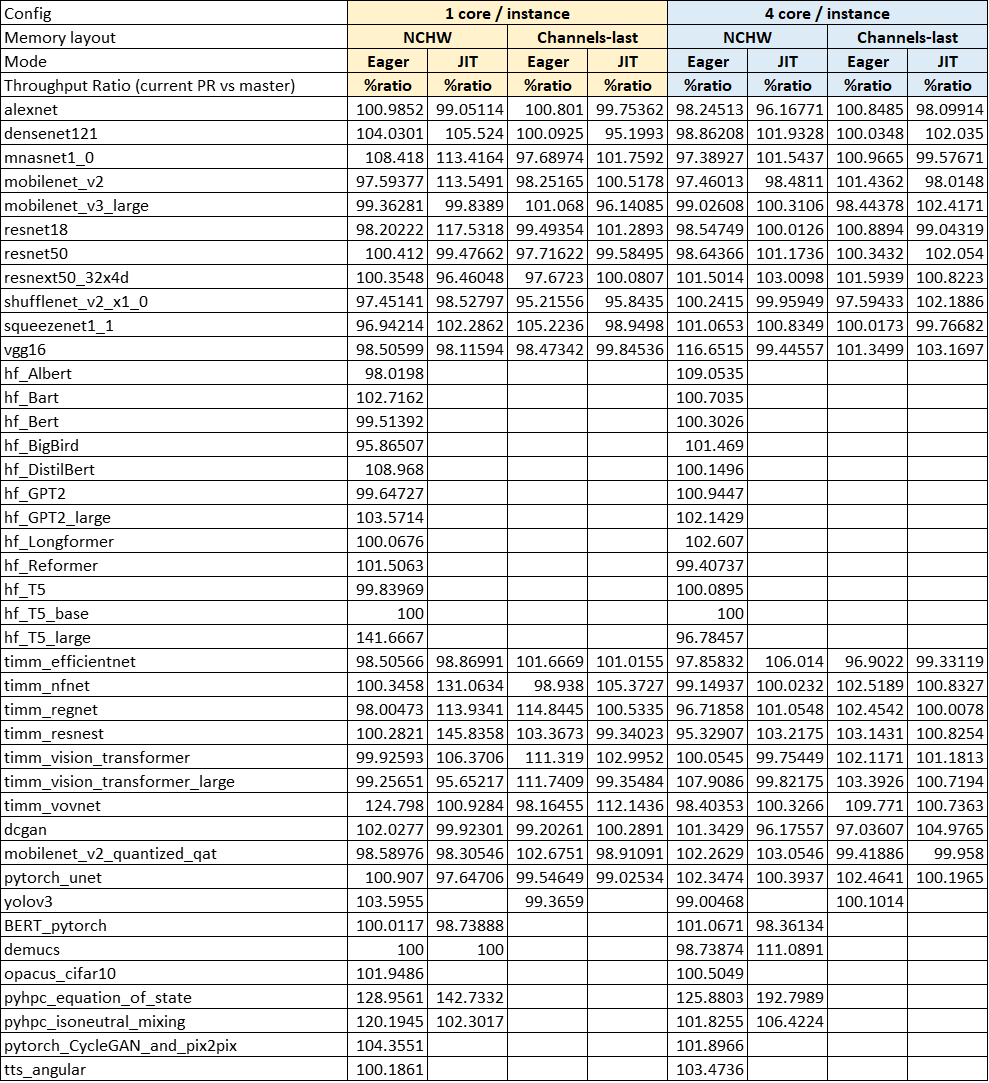
Summary:
We should not fork in deploy when initializing torch.

    Traceback (most recent call last):
    File "<string>", line 38, in <module>
    File "<string>", line 36, in __run
    File "/usr/local/fbcode/platform010/lib/python3.8/runpy.py", line 194, in _run_module_as_main
        return _run_code(code, main_globals, None,
    File "/usr/local/fbcode/platform010/lib/python3.8/runpy.py", line 87, in _run_code
        exec(code, run_globals)
    File "/data/users/zyan/fbsource/buck-out/v2/gen/fbcode/104a4d5c3a690252/multipy/runtime/__test_py__/test_py#link-tree/multipy/runtime/test_py.py", line 61, in <module>
        import torch # has to be done serially otherwise things will segfault
    File "/data/users/zyan/fbsource/buck-out/v2/gen/fbcode/104a4d5c3a690252/multipy/runtime/__test_py__/test_py#link-tree/torch/__init__.py", line 158, in <module>
        platform.system() != 'Windows':
    File "/usr/local/fbcode/platform010/lib/python3.8/platform.py", line 891, in system
        return uname().system
    File "/usr/local/fbcode/platform010/lib/python3.8/platform.py", line 857, in uname
        processor = _syscmd_uname('-p', '')
    File "/usr/local/fbcode/platform010/lib/python3.8/platform.py", line 613, in _syscmd_uname
        output = subprocess.check_output(('uname', option),

Test Plan: override a local script run trigger init and set `subprocess.check_output` to None

Reviewed By: yinghai, houseroad

Differential Revision: D41848592

Pull Request resolved: https://github.com/pytorch/pytorch/pull/90492
Approved by: https://github.com/PaliC
Happy to split this PR more if it helps.

This PR adds functorch.grad support for autograd.Function. There's a lot
going on; here is the high level picture and there are more details as
comments in the code.

Mechanism (PyOperator)
- Somehow, autograd.Function needs to dispatch with functorch. This is
necessary because every layer of functorch needs to see the
autograd.Function; grad layers need to preserve the backward pass.
- The mechanism for this is via PyOperator. If functorch transforms are
active, then we wrap the autograd.Function in a `custom_function_call`
PyOperator where we are able to define various rules for functorch
transforms.
- `custom_function_call` has a rule for the functorch grad transform.

autograd.Function changes
- I needed to make some changes to autograd.Function to make this work.
- First, this PR splits autograd.Function into a _SingleLevelFunction
(that works with a single level of functorch transform) and
autograd.Function (which works with multiple levels). This is necessary
because functorch's grad rule needs some way of specifying a backward
pass for that level only.
- This PR changes autograd.Function's apply to eitehr call
`custom_function_call` (if functorch is active) or super().apply (if
functorch isn't active).

Testing
- Most of this PR is just testing. It creates an autograd.Function
OpInfo database that then gets passed to the functorch grad-based tests
(grad, vjp, vjpvjp).
- Since functorch transform tests are autogenerated from OpInfo tests,
this is the easiest way to test various autograd.Function with
functorch.

Future
- jvp and vmap support coming next
- better error message (functorch only supports autograd.Function that
have the optional setup_context staticmethod)
- documentation to come when we remove the feature flag

Pull Request resolved: https://github.com/pytorch/pytorch/pull/89860
Approved by: https://github.com/soulitzer
Adds a setup_context staticmethod to autograd.Function.
If it exists, then the user splits the ctx-specific logic from the
forward() and puts it in the setup_context staticmethod.

Docs will come later when we remove the feature flag.

Test Plan:
- some light tests
Pull Request resolved: https://github.com/pytorch/pytorch/pull/89859
Approved by: https://github.com/soulitzer
This PR adds a private runtime feature flag for the feature work we're going
to do with extending autograd.Function. The motivation of the feature flag
is:
- to guard the feature against unsuspecting users
- control the release of the feature to when we are ready to release it

We might not even need the feature flag (because we hope to have the
work done in the next month), but it is good practice and it does touch
currently public API (autograd.Function).

Concretely, "autograd.Function extension" refers to:
- adding an optional `setup_context` staticmethod to autograd.Function
- adding an optional `vmap` staticmethod to autograd.Function
- autograd.Function support for functorch

Test Plan:
- new test that the feature flag works
Pull Request resolved: https://github.com/pytorch/pytorch/pull/89858
Approved by: https://github.com/soulitzer
Summary:
This pull request makes some tweaks on LazyTensor class such that it's easier for XLATensor to inherit.

1. It replaces data_ptr() with data() which now returns a const shared_ptr& type.
2. It adds a temporary ctor to LazyTensor::Data such that XLATensor::Data can easily inherits it.
3. It moves LazyTensor(std::shared_ptr<Data>) and SetTensorData(at::Tensor) to protected for XLATensor to access.

Test Plan:
CI.

Pull Request resolved: https://github.com/pytorch/pytorch/pull/90363
Approved by: https://github.com/JackCaoG
The function signature in its current state is ambiguous.
Its an inline function that is also declared to be imported from the DLL.
which leaves it subject to compilers decision to choose one or the other and depending on what the compiler/linker may choose we may get one of the two behaviors for the `aten::init_num_threads` call:

1. Once-per-dll-in-a-thread (if its inlined)
2. Once-per-thread (if its imported)

I suspect once-per-dll-in-a-thread is already the case currently because it being tagged inline
So removing the inline will simply make it a little more consistent and clear.

The function exists to avoid repeated calls to aten::init_num_threads.
Being in an "internal" namespace, the function isnt expected to be called by external plugins which means that the "once-per-dll-in-a-thread" behavior isn't that much of a problem anyway

Pull Request resolved: https://github.com/pytorch/pytorch/pull/89511
Approved by: https://github.com/malfet
Adds 2 new hybrid sharding strategy to FSDP:
1. HYBRID_SHARD: applies zero-3 style sharding within a node, and data parallel across
2. HYBRID_SHARD_ZERO2: applies zero-2 style sharding within a node, and data parallel across

These are useful for medium sized models and aim to decrease communication volume, tests and benchmarks will be run to understand which workloads are optimal under which sharding strategy.

Hybrid sharding in general works by sharding the model using a process group within a single node, and creating intra-node process groups for replication / data parallelism. The user either needs to pass in a tuple of these process groups, or None, and we generate the process groups appropriately.

** Acknowledgements **
- @awgu 's excellent prototype: 5ad3a16d48
- @liangluofb For ideation, feedback, and initial implementation and experimentation
Pull Request resolved: https://github.com/pytorch/pytorch/pull/89915
Approved by: https://github.com/awgu
This makes the signature of `torch.masked.std` and `var` more consistent with the global namespace variant and also updates the sample inputs to repurpose the existing `sample_inputs_std_var` inputs which fully exercise the `correction` argument.

Pull Request resolved: https://github.com/pytorch/pytorch/pull/87118
Approved by: https://github.com/cpuhrsch
I believe that @mrshenli used `ModuleWrapPolicy({UnitModule})` when applying `fully_shard` to `UnitModule`s because `policy=None` was not supported. However, he added that support in a previous PR, so this PR simplifies to using `policy=None` to make the intention more clear.
Pull Request resolved: https://github.com/pytorch/pytorch/pull/90400
Approved by: https://github.com/mrshenli
- This PR introduces a new concept, the _communication module_ (denoted `comm_module`), that represents the module responsible for the unshard/reshard pair for a `FlatParamHandle`. This is well-defined because the current design assumes that each `FlatParamHandle` only has _one_ unshard/reshard pair for either the forward or backward pass.
    - For the wrapper code path, the `comm_module` is exactly the module already being passed to the `FlatParamHandle` constructor.
    - For the composable code path, the `comm_module` is not necessarily the module already being passed to the `FlatParamHandle`. This is because the module already being passed is always the local FSDP root module to give complete FQNs, instead of local FQNs. Distinguishing the communication module from the local FSDP root module can provide more flexibility for non-recursive wrapping designs in the future.
- This PR adds a unit test `test_unshard_reshard_order` that explicitly checks that `_unshard` and `_reshard` are called in the exactly the same order across the two code paths.
- This PR does not fix `test_checkpoint_fsdp_submodules_use_reentrant`. However, the error message changes, so this PR accommodates that.
    - The error is now the same as if we used the equivalent wrapper FSDP:
    ```
    test_model.u1 = FSDP(test_model.u1, use_orig_params=True)
    test_model.u2 = FSDP(test_model.u2, use_orig_params=True)
    ```
    - The error is also the same as if we used wrapper FSDP with `use_orig_params=False`, so it is not unique to `use_orig_params=True`.

---

**`comm_module` Example**

```
model = Model(
    seq1: nn.Sequential(
        nn.Linear
        nn.ReLU
        nn.Linear
        nn.ReLU
    )
    seq2: nn.Sequential(
        nn.Linear
        nn.ReLU
        nn.Linear
        nn.ReLU
    )
)
policy = ModuleWrapPolicy({nn.Sequential})
fully_shard(model, policy=policy)
FullyShardedDataParallel(model, auto_wrap_policy=policy)
```
- This policy constructs two `FlatParamHandle`s, one for `seq1` and one for `seq2`.
- `FullyShardedDataParallel` will pass `seq1` and `seq2` as the `module` argument to the two `FlatParamHandle`s, respectively.
- `fully_shard()` will pass `model` as the `module` argument to every `FlatParamHandle`.
- `FullyShardedDataParallel` will pass `seq1` and `seq2` as the `comm_module` argument to the two `FlatParamHandle`s, respectively.
- `fully_shard()` will pass `seq1` and `seq2` as the `comm_module` argument to the two `FlatParamHandle`s, respectively.

Pull Request resolved: https://github.com/pytorch/pytorch/pull/90387
Approved by: https://github.com/mrshenli
Unlike for FSDP, where we already diverged to using per-test-file models, let us try to use the same set of models for the composable API effort. This can improve debugging efficiency because we know which module structures we support and which we do not _across all of our composable APIs_.

This PR had to perform some surgery for `test_materialize_meta_module`. Writing a correct parameter initialization function for meta device initialization is not easy, and we should revisit this. The old implementation, which followed the style of the previous unit tests--namely, using `module.to_empty()`--is actually incorrect for nested FSDP applications because `module.to_empty()` will re-initialize already materialized parameters and the module materialization proceeds bottom up. The existing unit test in `test_fsdp_meta.py` passes because it sets every parameter to ones (`self.weight.fill_(1)`), which is idempotent to re-initialization.
Pull Request resolved: https://github.com/pytorch/pytorch/pull/90386
Approved by: https://github.com/mrshenli
The `PositiveDefiniteTransform` is required to transform from an unconstrained space to positive definite matrices, e.g. to support testing the Wishart mode in #76690. It is a simple extension of the `LowerCholeskyTransform`.

I've also added a small test that ensures the generated data belong to the domain of the associated transform. Previously, the data generated for the inverse transform of the `LowerCholeskyTransform` wasn't part of the domain, and the test only passed because the comparison uses `equal_nan=True`.

Pull Request resolved: https://github.com/pytorch/pytorch/pull/76777
Approved by: https://github.com/lezcano, https://github.com/fritzo, https://github.com/soumith
Summary:

This PR implements `prune` in BaseStructuredSparsifier:

`prune` is a function that takes in a model with structured sparsity parametritizations (the result of `prepare`) and will return a resized model with the masked out weights removed.

`prune` is defined by a mapping from **patterns** to different **pruning functions**.
	- **patterns** are just sequences of operations, for example `(nn.Linear, activation, nn.Linear)`
	- **pruning functions** are functions that take in an matched pattern as args and will resize the appropriate layer sizes and weights.
	  ```
	  def prune_linear_activation_linear(linear1, activation, linear2):
		pass
	  ```
	- This is one line in the pattern config `(nn.Linear, activation, nn.Linear): prune_linear_activation_linear`

At a high level `prune` works by finding instances of the graph that match different patterns and then calling the mapped pruning functions on those matched patterns.
This is unlike the previous code which attempted to do both at the same time.

There may be some gaps in the patterns compared to the previous implementation, but the conversion functionality support should be the same.

Currently we have pruning functions for the following patterns:
    - linear -> linear
    - linear -> activation -> linear
    - conv2d -> conv2d
    - conv2d -> activation -> conv2d
    - conv2d -> activation -> pool -> conv2d
    - conv2d -> pool -> activation -> conv2d
    - conv2d -> adaptive pool -> flatten -> linear

Added in MyPy type hints as well for the prune_functions.

Test Plan:

Reviewers:

Subscribers:

Tasks:

Tags:
Pull Request resolved: https://github.com/pytorch/pytorch/pull/89777
Approved by: https://github.com/vkuzo
Prior to this change, the symbolic_fn `layer_norm` (before ONNX version 17) always lose precision when eps is smaller than Float type, while PyTorch always take eps as Double. This PR adds `onnx::Cast` into eps related operations to prevent losing precision during the calculation.
Pull Request resolved: https://github.com/pytorch/pytorch/pull/89869
Approved by: https://github.com/BowenBao
This is the last PR for integrating 2D into core distributed.

This PR does the following:
1. Add optimizer.py: this adds ability to load a state_dict in conjunction with FSDP sharded optimzer state.
2. Update default_planner.py to support 2D checkpoint.
3. Add test_fsdp_optim_state.py as a unit test for No. 1.
4. Fix bug in torch/testing/_internal/distributed/checkpoint_utils.py
5. Rename the filename for the APIs that should be private. Will organize and cleanup further in following PRs. #90328

Docstring and integration test will be added in the following PRs.
Pull Request resolved: https://github.com/pytorch/pytorch/pull/90212
Approved by: https://github.com/wanchaol
Summary:
This will make sure we don't run into an internal assert for clang tsan which has a cap of 63 on concurrently held lock count.
Seems like it is failing with 64 since the comparison is `<`, so setting it to 63 here.

```
llvm-project/compiler-rt/lib/sanitizer_common/sanitizer_deadlock_detector.h:67 "((n_all_locks_)) < (((sizeof(all_locks_with_contexts_)/sizeof((all_locks_with_contexts_)[0]))))"
```

Created from CodeHub with https://fburl.com/edit-in-codehub

Test Plan:
CI

Sandcastle run

Reviewed By: kimishpatel, salilsdesai

Differential Revision: D41444710

Pull Request resolved: https://github.com/pytorch/pytorch/pull/89453
Approved by: https://github.com/mcr229
Summary:
This diff introduces a set of changes that makes it possible for the host to get assertions from CUDA devices. This includes the introduction of

**`CUDA_KERNEL_ASSERT2`**

A preprocessor macro to be used within a CUDA kernel that, upon an assertion failure, writes the assertion message, file, line number, and possibly other information to UVM (Managed memory). Once this is done, the original assertion is triggered, which places the GPU in a Bad State requiring recovery. In my tests, data written to UVM appears there before the GPU reaches the Bad State and is still accessible from the host after the GPU is in this state.

Messages are written to a multi-message buffer which can, in theory, hold many assertion failures. I've done this as a precaution in case there are several, but I don't actually know whether that is possible and a simpler design which holds only a single message may well be all that is necessary.

**`TORCH_DSA_KERNEL_ARGS`**

This preprocess macro is added as an _argument_ to a kernel function's signature. It expands to supply the standardized names of all the arguments needed by `C10_CUDA_COMMUNICATING_KERNEL_ASSERTION` to handle device-side assertions. This includes, eg, the name of the pointer to the UVM memory the assertion would be written to. This macro abstracts the arguments so there is a single point of change if the system needs to be modified.

**`c10::cuda::get_global_cuda_kernel_launch_registry()`**

This host-side function returns a singleton object that manages the host's part of the device-side assertions. Upon allocation, the singleton allocates sufficient UVM (Managed) memory to hold information about several device-side assertion failures. The singleton also provides methods for getting the current traceback (used to identify when a kernel was launched). To avoid consuming all the host's memory the singleton stores launches in a circular buffer; a unique "generation number" is used to ensure that kernel launch failures map to their actual launch points (in the case that the circular buffer wraps before the failure is detected).

**`TORCH_DSA_KERNEL_LAUNCH`**

This host-side preprocessor macro replaces the standard
```
kernel_name<<<blocks, threads, shmem, stream>>>(args)
```
invocation with
```
TORCH_DSA_KERNEL_LAUNCH(blocks, threads, shmem, stream, args);
```
Internally, it fetches the UVM (Managed) pointer and generation number from the singleton and append these to the standard argument list. It also checks to ensure the kernel launches correctly. This abstraction on kernel launches can be modified to provide additional safety/logging.

**`c10::cuda::c10_retrieve_device_side_assertion_info`**
This host-side function checks, when called, that no kernel assertions have occurred. If one has. It then raises an exception with:
1. Information (file, line number) of what kernel was launched.
2. Information (file, line number, message) about the device-side assertion
3. Information (file, line number) about where the failure was detected.

**Checking for device-side assertions**

Device-side assertions are most likely to be noticed by the host when a CUDA API call such as `cudaDeviceSynchronize` is made and fails with a `cudaError_t` indicating
> CUDA error: device-side assert triggered CUDA kernel errors

Therefore, we rewrite `C10_CUDA_CHECK()` to include a call to `c10_retrieve_device_side_assertion_info()`. To make the code cleaner, most of the logic of `C10_CUDA_CHECK()` is now contained within a new function `c10_cuda_check_implementation()` to which `C10_CUDA_CHECK` passes the preprocessor information about filenames, function names, and line numbers. (In C++20 we can use `std::source_location` to eliminate macros entirely!)

# Notes on special cases

* Multiple assertions from the same block are recorded
* Multiple assertions from different blocks are recorded
* Launching kernels from many threads on many streams seems to be handled correctly
* If two process are using the same GPU and one of the processes fails with a device-side assertion the other process continues without issue
* X Multiple assertions from separate kernels on different streams seem to be recorded, but we can't reproduce the test condition
* X Multiple assertions from separate devices should be all be shown upon exit, but we've been unable to generate a test that produces this condition

Differential Revision: D37621532

Pull Request resolved: https://github.com/pytorch/pytorch/pull/84609
Approved by: https://github.com/ezyang, https://github.com/malfet
Summary:
In this logic, we are traversing the entries to find the module for STACK_GLOBAL entries.

According to 2837241f22/Lib/pickletools.py (L1799) we need to look for GET, BINGET and LONG_BINGET.

So this diff updates that. Also while testing, I found some cases of empty modules, for cases such as tanh. For this I added the option to skip processing when this is the case.

Test Plan: Tested with f392778829

Differential Revision: D41748595

Pull Request resolved: https://github.com/pytorch/pytorch/pull/90223
Approved by: https://github.com/PaliC
The original implementation of cond() operator support in dynamo operated by recursively calling export() on the inner subgraph.  This is problematic for a number of reasons:

* My original motivating reason: the original implementation had to play tricks to feed real tensors to the recursive export call, which means that it doesn't work well with tracing with dynamic shapes (where we MUST stay in fake tensors to accurately track dynamic shapes across the cond invocation)
* If there are pending side effects, the recursive export() call won't see those side effects (as they are only tracked by Dynamo, not actually applied to the Python environment.) You can see an example where dynamo cond tracing does the wrong thing at https://github.com/pytorch/pytorch/pull/90208
* If there were side effects inside the true/false branch, these side effects were silently lost (as the export only returns the graph of tensor operations, and not any of the residual Python bytecodes necessary to reapply any side effects.) This could have substantive effects on the export of subsequent parts of the model, as those parts of the models could rely on the side effects.
* It was not possible to track NN module accesses inside the true/false branches, necessitating a hack where the NN module was explicitly passed in as an input to cond https://github.com/pytorch/pytorch/pull/87020#issuecomment-1338842844 which doesn't really make any sense from a backend compilation perspective
* Guards induced from the inside of the true/false branch were not properly propagated to the top level guards; they were just silently dropped (in fact, the original implementation checked that the true/false branch produce the same guards which... is not useful? Like, I don't think that actually is even necessary for correctness)

This PR replaces the old implementation with a new implementation based on graphstate checkpointing. The basic idea is to process a cond(), we checkpoint the state of our interpreter, run the true branch, rollback to our checkpoint, run the false branch, rollback to our checkpoint and then merge the changes from both of the checkpoints. I require the true/false branches to have exactly the same side effects, but union their guards.

Some of the details:

* Dynamo is too aggressive with tracking side effects when processing closures, c.f. https://github.com/pytorch/torchdynamo/pull/233/files#r1040480078 The basic problem is whenever I define a closure, this immediately counts as a side effect, even if I didn't actually mutate anything. This triggered on the nested cond export example. To prevent this from happening, I optimistically avoid tracking side effects, but if a STORE_DEREF happens, I restart analysis with the relevant Source.name() added to `mutated_closure_cell_contents` so we start tracking on closure allocation. This is enough to fix the relevant test.
* For the most part, I assert that the graph states must be equivalent after applying the true/false branches. During debugging, I found it useful to be able to compare two graph states and give a better description about what the divergence was. You can test this using the `diff()` method I've added to a few structures.
* The implementation now supports NestedUserFunctionVariable, which is nice as it allows the true/false branches to be defined closer to the cond implementation.
* I fixed the naming of the true/false subgraphs; previously they were named `name_0`, `name_1`, now they are named `cond_true_0` and `cond_false_0`
* I added `name_to_input` to the saved graph state. I don't actually know if this is necessary, but it seemed like a good idea.
* I have to play some tricks to get the speculating execution of the true/false branch to record into a subgraph. After a careful read of OutputGraph, I found that what would work is overriding graph with a fresh Graph that we want to write things into, and manually setting up the inputs/outputs. It's a little delicate as you have to make sure you reset the Graph to its original before you restore a checkpoint, as checkpoints don't actually save graph for efficiency, and just undo changes on the graph. This capability may usefully get refactored to OutputGraph but I didn't do it in this PR for simplicity.

There are some further problems with the cond() implementation that I leave for future work. Most of these were preexisting with the original implementation.

* Not a problem per se, but if an NN module is used by both the true/false branch, it will show up in the final graph twice (since it has to be a submodule of the GraphModule that makes use of it.) I hope the export pipeline can deal with this.
* List of tensor output for cond is not supported.
* The true/false return values may not have consistent sizes/dims/etc, and we don't check them for consistency.
* If we modify fake tensors in the true/false branches, we aren't rolling them back, c.f. https://github.com/pytorch/torchdynamo/issues/1840

Signed-off-by: Edward Z. Yang <ezyang@fb.com>

Pull Request resolved: https://github.com/pytorch/pytorch/pull/90286
Approved by: https://github.com/voznesenskym