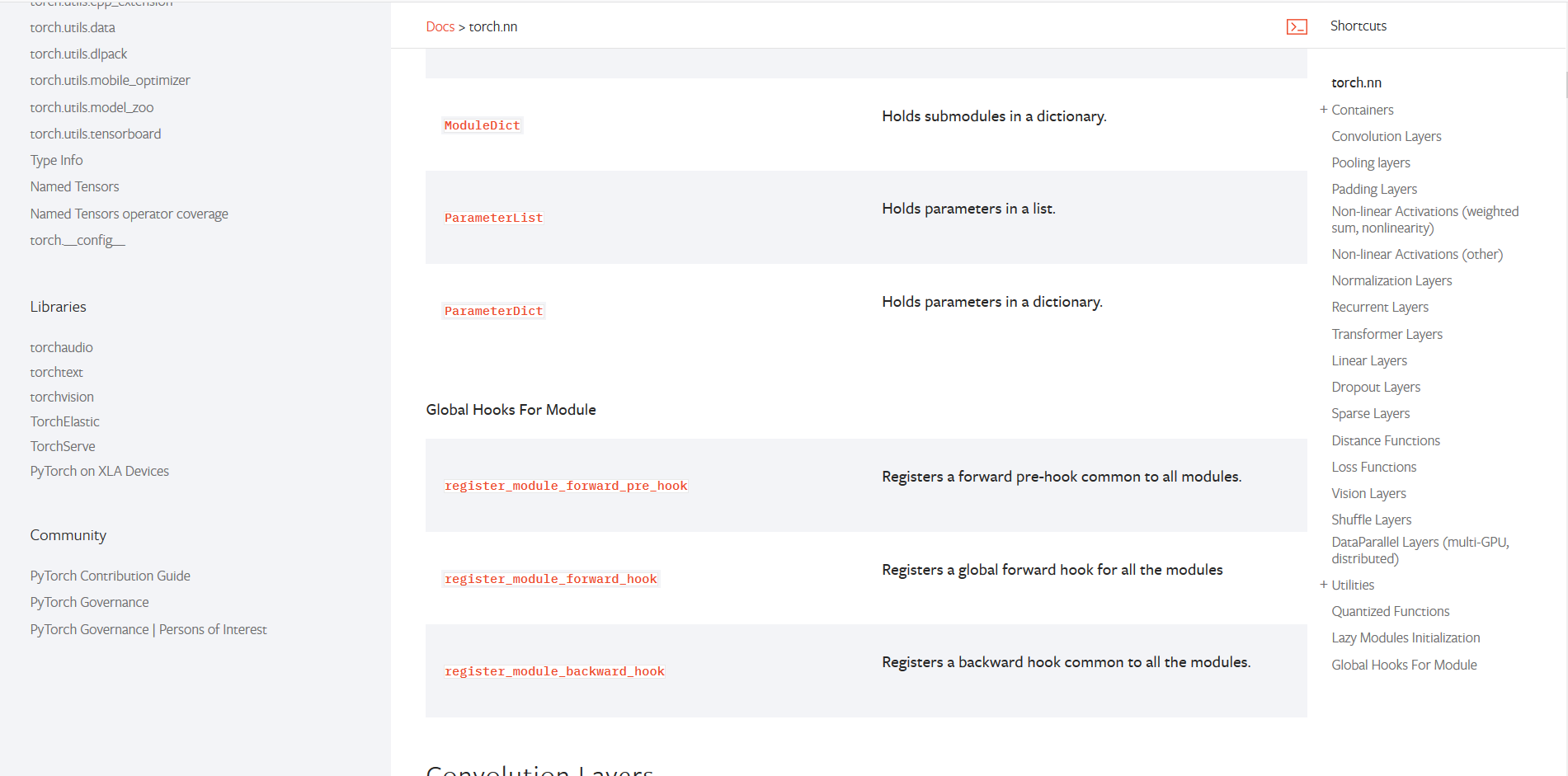
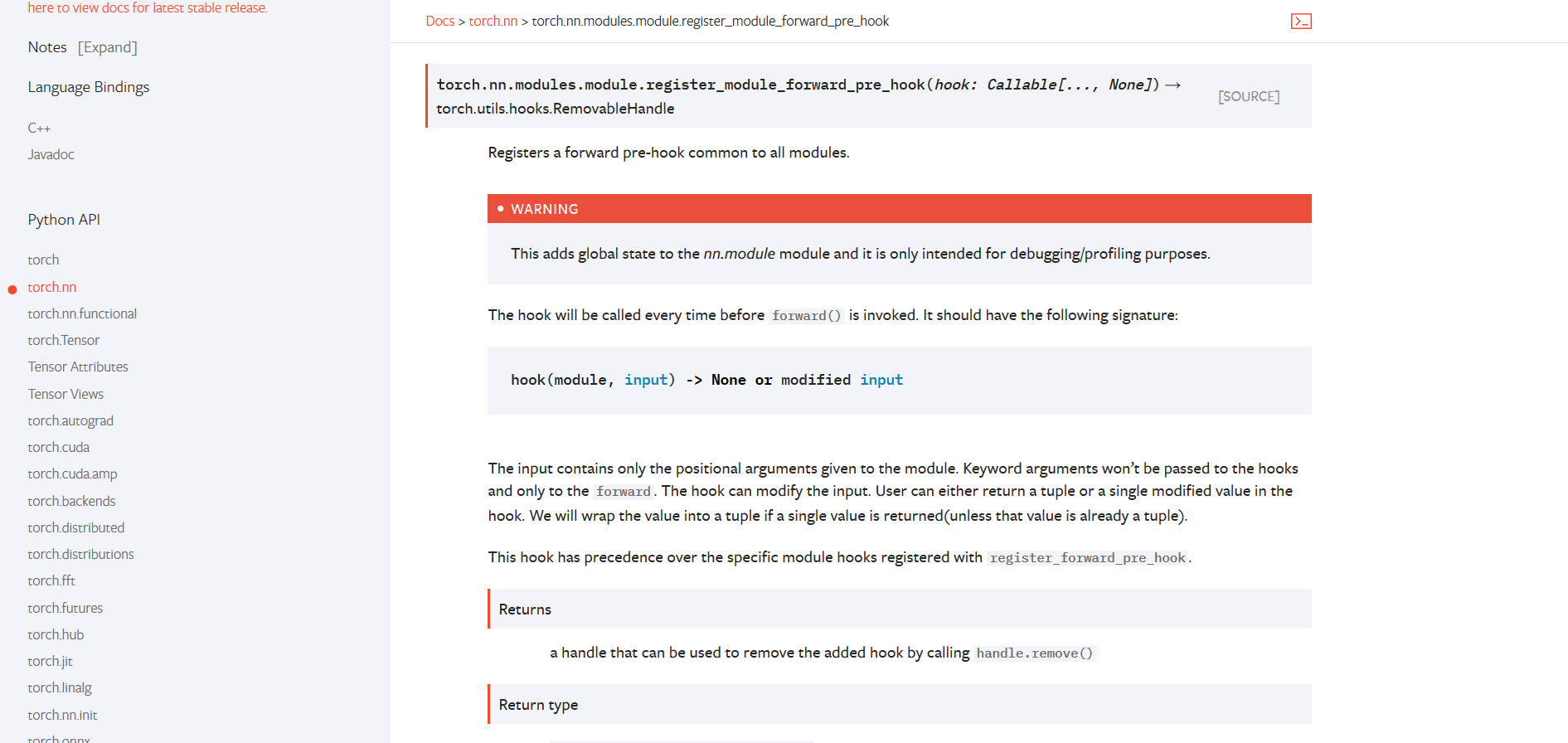
Options to address the "undocumented python objects":

1. Reference the functions in the .rst via the torch.nn.modules namespace. Note that this changes the generated doc filenames / locations for most of these functions!
2. [Not an option] Monkeypatch `__module__` for these objects (broke several tests in CI due to `inspect.findsource` failing after this change)
3. Update the .rst files to also document the torch.nn.modules forms of these functions, duplicating docs.

#### [this is the docs page added](https://docs-preview.pytorch.org/pytorch/pytorch/158491/nn.aliases.html)
This PR takes option 3 by adding an rst page nn.aliases that documents the aliases in nested namespaces, removing all the torch.nn.modules.* entries from the coverage skiplist except
- NLLLoss2d (deprecated)
- Container (deprecated)
- CrossMapLRN2d (what is this?)
- NonDynamicallyQuantizableLinear

This mostly required adding docstrings to `forward`, `extra_repr` and `reset_parameters`. Since forward arguments are already part of the module docstrings I just added a very basic docstring.

Pull Request resolved: https://github.com/pytorch/pytorch/pull/158491
Approved by: https://github.com/janeyx99
Add similar semantics for creating a buffer object similar to creating a parameter. This is done by introducing a new Buffer class that can be used for type disambiguation. The underlying functionality of registering a buffer remains the same as the register_buffer method has not been changed. The persistent parameter in the Buffer type is to indicate whether a buffer object should be persistent or not. Other non-test changes have to do with getting the new Buffer type recognized by inductor and dynamo. Remaining changes are test changes to make sure that the Buffer type can be used as a drop in replacement for register_buffer as it just leads to register_buffer being called. The addition of this new functionality still allows for normal tensors to be used as buffers so these changes are intended to be backwards compatible.
Fixes#35735
Co-authored-by: Mikayla Gawarecki <mikaylagawarecki@gmail.com>
Pull Request resolved: https://github.com/pytorch/pytorch/pull/125971
Approved by: https://github.com/albanD, https://github.com/anijain2305, https://github.com/mlazos
Fixes https://github.com/pytorch/pytorch/issues/123068
Fixes https://github.com/pytorch/pytorch/issues/111256

While investigating the flaky doc build failure .w.r.t duplicated `torch.ao.quantization.quantize` docstring warning, i.e. https://github.com/pytorch/pytorch/actions/runs/8532187126/job/23376591356#step:10:1260, I discover an old but still open bug in Sphinx https://github.com/sphinx-doc/sphinx/issues/4459.  These warnings have always been there, but they are hidden because we are using `-j auto` to build docs with multiple threads.  It's just by chance that they start to surface now.

The issue can be reproduced by removing `-j auto` from https://github.com/pytorch/pytorch/blob/main/docs/Makefile#L5 and run `make html` locally.  Then, these warnings shows up consistently.  As `make html` treats warnings as errors, they will fail the build.

```
...
/data/users/huydo/conda/py3.8/lib/python3.8/site-packages/torch/ao/quantization/quantize.py:docstring of torch.ao.quantization.quantize.quantize:1: WARNING: duplicate object description of torch.ao.quantization.quantize, other instance in quantization, use :noindex: for one of them
/data/users/huydo/conda/py3.8/lib/python3.8/site-packages/torch/nn/parallel/data_parallel.py:docstring of torch.nn.parallel.data_parallel.data_parallel:1: WARNING: duplicate object description of torch.nn.parallel.data_parallel, other instance in nn, use :noindex: for one of them
/data/users/huydo/conda/py3.8/lib/python3.8/site-packages/torch/nn/utils/spectral_norm.py:docstring of torch.nn.utils.spectral_norm.spectral_norm:1: WARNING: duplicate object description of torch.nn.utils.spectral_norm, other instance in nn, use :noindex: for one of them
/data/users/huydo/conda/py3.8/lib/python3.8/site-packages/torch/nn/utils/weight_norm.py:docstring of torch.nn.utils.weight_norm.weight_norm:1: WARNING: duplicate object description of torch.nn.utils.weight_norm, other instance in nn, use :noindex: for one of them
/data/users/huydo/github/pytorch/docs/source/nn.rst:579: WARNING: duplicate object description of torch.nn.parallel.data_parallel, other instance in generated/torch.nn.functional.torch.nn.parallel.data_parallel, use :noindex: for one of them
/data/users/huydo/github/pytorch/docs/source/nn.rst:594: WARNING: duplicate object description of torch.nn.utils.spectral_norm, other instance in generated/torch.nn.utils.spectral_norm, use :noindex: for one of them
/data/users/huydo/github/pytorch/docs/source/nn.rst:595: WARNING: duplicate object description of torch.nn.utils.weight_norm, other instance in generated/torch.nn.utils.weight_norm, use :noindex: for one of them
/data/users/huydo/github/pytorch/docs/source/quantization.rst:1348: WARNING: duplicate object description of torch.ao.quantization.quantize, other instance in generated/torch.ao.quantization.quantize, use :noindex: for one of them
...
```

The fix is just to clean up those duplicated placeholder py:module docs, which were there because these modules didn't have any docs originally.
Pull Request resolved: https://github.com/pytorch/pytorch/pull/123244
Approved by: https://github.com/andrewor14, https://github.com/malfet
# Summary
Simplification of Backend Selection

This PR deprecates the `torch.backends/cuda/sdp_kernel` context manager and replaces it with a new context manager `torch.nn.attention.sdpa_kernel`. This context manager also changes the api for this context manager.

For `sdp_kernel` one would specify the backend choice by taking the negation of what kernel they would like to run. The purpose of this backend manager was to only to be a debugging tool, "turn off the math backend" and see if you can run one of the fused implementations.

Problems:
- This pattern makes sense if majority of users don't care to know anything about the backends that can be run. However, if users are seeking to use this context manager then they are explicitly trying to run a specific backend.
- This is not scalable. We are working on adding the cudnn backend and this API makes it so so that more implementations will need to be turned off if user wants to explicitly run a given backend.
- Discoverability of the current context manager. It is somewhat un-intutive that this backend manager is in backends/cuda/init when this now also controls the CPU fused kernel behavior. I think centralizing to attention namespace will be helpful.

Other concerns:
- Typically backends (kernels) for operators are entirely hidden from users and implementation details of the framework. We have exposed this to users already, albeit not by default and with beta warnings. Does making backends choices even more explicit lead to problems when we potentially want to remove existing backends, (perhaps inputs shapes will get covered by newer backends).

A nice side effect is now that we aren't using the `BACKEND_MAP` in test_transformers many, many dynamo failures are passing for CPU tests.

Pull Request resolved: https://github.com/pytorch/pytorch/pull/114689
Approved by: https://github.com/cpuhrsch
# Summary
This PR introduces a new Tensor subclass that is designed to be used with torch.nn.functional.scaled_dot_product_attention. Currently we have a boolean `is_causal` flag that allows users to do do causal masking without the need to actually create the "realized" attention bias and pass into sdpa. We originally added this flag since there is native support in both fused kernels we support. This provides a big performance gain ( the kernels only need to iterate over ~0.5x the sequence, and for very large sequence lengths this can provide vary large memory improvements.

The flag was introduced when the early on in the kernel development and at the time it was implicitly meant to "upper_left" causal attention. This distinction only matters when the attention_bias is not square. For a more detailed break down see: https://github.com/pytorch/pytorch/issues/108108. The kernels default behavior has since changed, largely due to the rise of autogressive text generation. And unfortunately this would lead to a BC break. In the long term it may actually be beneficial to change the default meaning of `is_causal` to represent lower_right causal masking.

The larger theme though is laid here: https://github.com/pytorch/pytorch/issues/110681. The thesis being that there is alot of innovation in SDPA revolving around the attention_bias being used. This is the first in hopefully a few more attention_biases that we would like to add. The next interesting one would be `sliding_window` which is used by the popular mistral model family.

Results from benchmarking, I improved the meff_attention perf hence the slightly decreased max perf.
```Shell
+---------+--------------------+------------+-----------+-----------+-----------+-----------+----------------+----------+
|  Type   |      Speedup       | batch_size | num_heads | q_seq_len | k_seq_len | embed_dim |     dtype      | head_dim |
+---------+--------------------+------------+-----------+-----------+-----------+-----------+----------------+----------+
| Average | 1.2388050062214226 |            |           |           |           |           |                |          |
|   Max   | 1.831672915579016  |    128     |    32     |   1024    |   2048    |   2048    | torch.bfloat16 |    64    |
|   Min   | 0.9430534166730135 |     1      |    16     |    256    |    416    |   2048    | torch.bfloat16 |   128    |
+---------+--------------------+------------+-----------+-----------+-----------+-----------+----------------+----------+
```

Pull Request resolved: https://github.com/pytorch/pytorch/pull/114823
Approved by: https://github.com/cpuhrsch
Add non-package python modules to the public API checks.
The original change is to remove the `ispkg` check in this line
https://github.com/pytorch/pytorch/blob/main/docs/source/conf.py#L518

Everything else is to add the appropriate modules to the rst files, make sure every module we provide can be imported (fixed by either making optional dependencies optional or just deleting files that have been un-importable for 3 years), make API that are both modules and functions (like torch.autograd.gradcheck) properly rendered on the docs website without confusion and add every non-documented API to the allow list (~3k of them).

Next steps will be to try and fix these missing docs
Pull Request resolved: https://github.com/pytorch/pytorch/pull/110568
Approved by: https://github.com/zou3519
Add similar semantics for creating a buffer object similar to creating a parameter. This is done by introducing a new `Buffer` class that can be used for type disambiguation. The underlying functionality of registering a buffer remains the same as the `register_buffer` method has not been changed. The `persistent` parameter in the `Buffer` type is to indicate whether a buffer object should be persistent or not. Other non-test changes have to do with getting the new `Buffer` type recognized by inductor and dynamo. Remaining changes are test changes to make sure that the `Buffer` type can be used as a drop in replacement for `register_buffer` as it just leads to `register_buffer` being called. The addition of this new functionality still allows for normal tensors to be used as buffers so these changes are intended to be backwards compatible.
Fixes#35735
Pull Request resolved: https://github.com/pytorch/pytorch/pull/104069
Approved by: https://github.com/mikaylagawarecki
Fixes#95796
### Implementation
Adds python implementation for `nn.ZeroPad1d` and `nn.ZeroPad3d` in `torch/nn/modules/padding.py`.
Adds cpp implementation for `nn::ZeroPad1d` and `nn::ZeroPad3d` in the following 3 files, refactored with templates similarly to `nn::ConstantPad`'s implementation: <br>
- `torch/crsc/api/include/torch/nn/modules/padding.h`
- `torch/csrc/api/include/torch/nn/options/padding.h`
- `torch/csrc/api/src/nn/modules/padding.cpp`
Also added relevant definitions in `torch/nn/modules/__init__.py`.
### Testing
Adds the following tests:
- cpp tests of similar length and structure as `ConstantPad` and the existing `ZeroPad2d` impl in `test/cpp/api/modules.cpp`
- cpp API parity tests in `torch/testing/_internal/common_nn.py`
- module init tests in `test/test_module_init.py`
Also added relevant definitions in `test/cpp_api_parity/parity-tracker.md`
Pull Request resolved: https://github.com/pytorch/pytorch/pull/96295
Approved by: https://github.com/soulitzer
Summary:
Working towards https://docs.google.com/document/d/10yx2-4gs0gTMOimVS403MnoAWkqitS8TUHX73PN8EjE/edit?pli=1#

This PR:
- Ensure that all the submodules are listed in a rst file (that ensure they are considered by the coverage tool)
- Remove some long deprecated code that just error out on import
- Remove the allow list altogether to ensure nothing gets added back there

Pull Request resolved: https://github.com/pytorch/pytorch/pull/73983

Reviewed By: anjali411

Differential Revision: D34787908

Pulled By: albanD

fbshipit-source-id: 163ce61e133b12b2f2e1cbe374f979e3d6858db7
(cherry picked from commit c9edfead7a01dc45bfc24eaf7220d2a84ab1f62e)
Summary:
Implements an orthogonal / unitary parametrisation.

It does passes the tests and I have trained a couple models with this implementation, so I believe it should be somewhat correct. Now, the implementation is very subtle. I'm tagging nikitaved  and IvanYashchuk as reviewers in case they have comments / they see some room for optimisation of the code, in particular of the `forward` function.

Fixes https://github.com/pytorch/pytorch/issues/42243

Pull Request resolved: https://github.com/pytorch/pytorch/pull/62089

Reviewed By: ezyang

Differential Revision: D30639063

Pulled By: albanD

fbshipit-source-id: 988664f333ac7a75ce71ba44c8d77b986dff2fe6
Summary:
Fixes https://github.com/pytorch/pytorch/issues/27655

This PR adds a C++ and Python version of ReflectionPad3d with structured kernels. The implementation uses lambdas extensively to better share code from the backward and forward pass.

Pull Request resolved: https://github.com/pytorch/pytorch/pull/59791

Reviewed By: gchanan

Differential Revision: D29242015

Pulled By: jbschlosser

fbshipit-source-id: 18e692d3b49b74082be09f373fc95fb7891e1b56
Summary:
The `UninitializedBuffer` class was previously left out of `nn.rst`, so it was not included in the generated documentation.

Pull Request resolved: https://github.com/pytorch/pytorch/pull/59021

Reviewed By: anjali411

Differential Revision: D28723044

Pulled By: jbschlosser

fbshipit-source-id: 71e15b0c7fabaf57e8fbdf7fbd09ef2adbdb36ad
Summary:
This PR introduces a helper function named `torch.nn.utils.skip_init()` that accepts a module class object + `args` / `kwargs` and instantiates the module while skipping initialization of parameter / buffer values. See discussion at https://github.com/pytorch/pytorch/issues/29523 for more context. Example usage:

```python
import torch

m = torch.nn.utils.skip_init(torch.nn.Linear, 5, 1)
print(m.weight)

m2 = torch.nn.utils.skip_init(torch.nn.Linear, 5, 1, device='cuda')
print(m2.weight)

m3 = torch.nn.utils.skip_init(torch.nn.Linear, in_features=5, out_features=1)
print(m3.weight)
```
```
Parameter containing:
tensor([[-3.3011e+28,  4.5915e-41, -3.3009e+28,  4.5915e-41,  0.0000e+00]],
       requires_grad=True)
Parameter containing:
tensor([[-2.5339e+27,  4.5915e-41, -2.5367e+27,  4.5915e-41,  0.0000e+00]],
       device='cuda:0', requires_grad=True)
Parameter containing:
tensor([[1.4013e-45, 0.0000e+00, 0.0000e+00, 0.0000e+00, 0.0000e+00]],
       requires_grad=True)
```

Bikeshedding on the name / namespace is welcome, as well as comments on the design itself - just wanted to get something out there for discussion.

Pull Request resolved: https://github.com/pytorch/pytorch/pull/57555

Reviewed By: zou3519

Differential Revision: D28640613

Pulled By: jbschlosser

fbshipit-source-id: 5654f2e5af5530425ab7a9e357b6ba0d807e967f
Summary:
Adds a new file under `torch/nn/utils/parametrizations.py` which should contain all the parametrization implementations

For spectral_norm we add the `SpectralNorm` module which can be registered using `torch.nn.utils.parametrize.register_parametrization` or using a wrapper: `spectral_norm`, the same API the old implementation provided.

Most of the logic is borrowed from the old implementation:
 - Just like the old implementation, there should be cases when retrieving the weight should perform another power iteration (thus updating the weight) and cases where it shouldn't. For example in eval mode `self.training=True`, we do not perform power iteration.

There are also some differences/difficulties with the new implementation:
 - Using new parametrization functionality as-is there doesn't seem to be a good way to tell whether a 'forward' call was the result of parametrizations are unregistered (and leave_parametrizations=True) or when the injected property's getter was invoked. The issue is that we want perform power iteration in the latter case but not the former, but we don't have this control as-is. So, in this PR I modified the parametrization functionality to change the module to eval mode before triggering their forward call
 - Updates the vectors based on weight on initialization to fix https://github.com/pytorch/pytorch/issues/51800 (this avoids silently update weights in eval mode). This also means that we perform twice any many power iterations by the first forward.
 - right_inverse is just the identity for now, but maybe it should assert that the passed value already satisfies the constraints
 - So far, all the old spectral_norm tests have been cloned, but maybe we don't need so much testing now that the core functionality is already well tested

Pull Request resolved: https://github.com/pytorch/pytorch/pull/57784

Reviewed By: ejguan

Differential Revision: D28413201

Pulled By: soulitzer

fbshipit-source-id: e8f1140f7924ca43ae4244c98b152c3c554668f2
Summary:
Provides the implementation for feature request issue https://github.com/pytorch/pytorch/issues/28937.

Adds the `Parametrization` functionality and implements `Pruning` on top of it.
It adds the `auto` mode, on which the parametrization is just computed once per forwards pass. The previous implementation computed the pruning on every forward, which is not optimal when pruning RNNs for example.

It implements a caching mechanism for parameters. This is implemented through the mechanism proposed at the end of the discussion https://github.com/pytorch/pytorch/issues/7313. In particular, it assumes that the user will not manually change the updated parameters between the call to `backwards()` and the `optimizer.step()`. If they do so, they would need to manually call the `.invalidate()` function provided in the implementation. This could be made into a function that gets a model and invalidates all the parameters in it. It might be the case that this function has to be called in the `.cuda()` and `.to` and related functions.

As described in https://github.com/pytorch/pytorch/issues/7313, this could be used, to implement in a cleaner way the `weight_norm` and `spectral_norm` functions. It also allows, as described in https://github.com/pytorch/pytorch/issues/28937, for the implementation of constrained optimization on manifolds (i.e. orthogonal constraints, positive definite matrices, invertible matrices, weights on the sphere or the hyperbolic space...)

TODO (when implementation is validated):
- More thorough test
- Documentation

Resolves  https://github.com/pytorch/pytorch/issues/28937

albanD

Pull Request resolved: https://github.com/pytorch/pytorch/pull/33344

Reviewed By: zhangguanheng66

Differential Revision: D26816708

Pulled By: albanD

fbshipit-source-id: 07c8f0da661f74e919767eae31335a9c60d9e8fe
Summary:
Retake on https://github.com/pytorch/pytorch/issues/40493 after all the feedback from albanD

This PR implements the generic Lazy mechanism and a sample `LazyLinear` layer with the `UninitializedParameter`.

The main differences with the previous PR are two;
Now `torch.nn.Module` remains untouched.
We don't require an explicit initialization or a dummy forward pass before starting the training or inference of the actual module. Making this much simpler to use from the user side.

As we discussed offline, there was the suggestion of not using a mixin, but changing the `__class__` attribute of `LazyLinear` to become `Linear` once it's completely initialized. While this can be useful, by the time being we need `LazyLinear` to be a `torch.nn.Module` subclass since there are many checks that rely on the modules being instances of `torch.nn.Module`.
This can cause problems when we create complex modules such as
```
class MyNetwork(torch.nn.Module):
    def __init__(self):
        super(MyNetwork, self).__init__()
        self.conv = torch.nn.Conv2d(20, 4, 2)
        self.linear = torch.nn.LazyLinear(10)
    def forward(self, x):
        y = self.conv(x).clamp(min=0)
        return self.linear(y)
```
Here, when the __setattr__ function is called at the time LazyLinear is registered, it won't be added to the child modules of `MyNetwork`, so we have to manually do it later, but currently there is no way to do such thing as we can't access the parent module from LazyLinear once it becomes the Linear module. (We can add a workaround to this if needed).

TODO:

Add convolutions once the design is OK
Fix docstrings

Pull Request resolved: https://github.com/pytorch/pytorch/pull/44538

Reviewed By: ngimel

Differential Revision: D24162854

Pulled By: albanD

fbshipit-source-id: 6d58dfe5d43bfb05b6ee506e266db3cf4b885f0c