Summary:
Match updated `Embedding` docs from https://github.com/pytorch/pytorch/pull/54026 as closely as possible. Additionally, update the C++ side `Embedding` docs, since those were missed in the previous PR.

There are 6 (!) places for docs:
1. Python module form in `sparse.py` - includes an additional line about newly constructed `Embedding`s / `EmbeddingBag`s
2. Python `from_pretrained()` in `sparse.py` (refers back to module docs)
3. Python functional form in `functional.py`
4. C++ module options - includes an additional line about newly constructed `Embedding`s / `EmbeddingBag`s
5. C++ `from_pretrained()` options
6. C++ functional options

Pull Request resolved: https://github.com/pytorch/pytorch/pull/56065

Reviewed By: malfet

Differential Revision: D27908383

Pulled By: jbschlosser

fbshipit-source-id: c5891fed1c9d33b4b8cd63500a14c1a77d92cc78
Summary:
As this diff shows, currently there are a couple hundred instances of raw `noqa` in the codebase, which just ignore all errors on a given line. That isn't great, so this PR changes all existing instances of that antipattern to qualify the `noqa` with respect to a specific error code, and adds a lint to prevent more of this from happening in the future.

Interestingly, some of the examples the `noqa` lint catches are genuine attempts to qualify the `noqa` with a specific error code, such as these two:
```
test/jit/test_misc.py:27:            print(f"{hello + ' ' + test}, I'm a {test}") # noqa E999
test/jit/test_misc.py:28:            print(f"format blank") # noqa F541
```
However, those are still wrong because they are [missing a colon](https://flake8.pycqa.org/en/3.9.1/user/violations.html#in-line-ignoring-errors), which actually causes the error code to be completely ignored:

- If you change them to anything else, the warnings will still be suppressed.
- If you add the necessary colons then it is revealed that `E261` was also being suppressed, unintentionally:
  ```
  test/jit/test_misc.py:27:57: E261 at least two spaces before inline comment
  test/jit/test_misc.py:28:35: E261 at least two spaces before inline comment
  ```

I did try using [flake8-noqa](https://pypi.org/project/flake8-noqa/) instead of a custom `git grep` lint, but it didn't seem to work. This PR is definitely missing some of the functionality that flake8-noqa is supposed to provide, though, so if someone can figure out how to use it, we should do that instead.

Pull Request resolved: https://github.com/pytorch/pytorch/pull/56272

Test Plan:
CI should pass on the tip of this PR, and we know that the lint works because the following CI run (before this PR was finished) failed:

- https://github.com/pytorch/pytorch/runs/2365189927

Reviewed By: janeyx99

Differential Revision: D27830127

Pulled By: samestep

fbshipit-source-id: d6dcf4f945ebd18cd76c46a07f3b408296864fcb
Summary:
This PR adds a `padding_idx` parameter to `nn.EmbeddingBag` and `nn.functional.embedding_bag`. As with `nn.Embedding`'s `padding_idx` argument, if an embedding's index is equal to `padding_idx` it is ignored, so it is not included in the reduction.

This PR does not add support for `padding_idx` for quantized or ONNX `EmbeddingBag` for opset10/11 (opset9 is supported). In these cases, an error is thrown if `padding_idx` is provided.

Fixes https://github.com/pytorch/pytorch/issues/3194

Pull Request resolved: https://github.com/pytorch/pytorch/pull/49237

Reviewed By: walterddr, VitalyFedyunin

Differential Revision: D26948258

Pulled By: jbschlosser

fbshipit-source-id: 3ca672f7e768941f3261ab405fc7597c97ce3dfc
Summary:
* Lowering NLLLoss/CrossEntropyLoss to ATen dispatch
* This allows the MLC device to override these ops
* Reduce code duplication between the Python and C++ APIs.

Pull Request resolved: https://github.com/pytorch/pytorch/pull/53789

Reviewed By: ailzhang

Differential Revision: D27345793

Pulled By: albanD

fbshipit-source-id: 99c0d617ed5e7ee8f27f7a495a25ab4158d9aad6
Summary:
Pull Request resolved: https://github.com/pytorch/pytorch/pull/45667

First part of #3867 (Pooling operators still to do)

This adds a `padding='same'` mode to the interface of `conv{n}d`and `nn.Conv{n}d`. This should match the behaviour of `tensorflow`. I couldn't find it explicitly documented but through experimentation I found `tensorflow` returns the shape `ceil(len/stride)` and always adds any extra asymmetric padding onto the right side of the input.

Since the `native_functions.yaml` schema doesn't seem to support strings or enums, I've moved the function interface into python and it now dispatches between the numerically padded `conv{n}d` and the `_conv{n}d_same` variant. Underscores because I couldn't see any way to avoid exporting a function into the `torch` namespace.

A note on asymmetric padding. The total padding required can be odd if both the kernel-length is even  and the dilation is odd. mkldnn has native support for asymmetric padding, so there is no overhead there, but for other backends I resort to padding the input tensor by 1 on the right hand side to make the remaining padding symmetrical. In these cases, I use `TORCH_WARN_ONCE` to notify the user of the performance implications.

Test Plan: Imported from OSS

Reviewed By: ejguan

Differential Revision: D27170744

Pulled By: jbschlosser

fbshipit-source-id: b3d8a0380e0787ae781f2e5d8ee365a7bfd49f22
Summary:
I edited the documentation for `nn.SiLU` and `F.silu` to:
- Explain that SiLU is also known as swish and that it stands for "Sigmoid Linear Unit."
- Ensure that "SiLU" is correctly capitalized.

I believe these changes will help users find the function they're looking for by adding relevant keywords to the docs.

Fixes: N/A

Pull Request resolved: https://github.com/pytorch/pytorch/pull/53239

Reviewed By: jbschlosser

Differential Revision: D26816998

Pulled By: albanD

fbshipit-source-id: b4e9976e6b7e88686e3fa7061c0e9b693bd6d198
Summary:
-Lower Relu6 to ATen
-Change Python and C++ to reflect change
-adds an entry in native_functions.yaml for that new function
-this is needed as we would like to intercept ReLU6 at a higher level with an XLA-approach codegen.
-Should pass functional C++ tests pass. But please let me know if more tests are required.

Pull Request resolved: https://github.com/pytorch/pytorch/pull/52723

Reviewed By: ailzhang

Differential Revision: D26641414

Pulled By: albanD

fbshipit-source-id: dacfc70a236c4313f95901524f5f021503f6a60f
Summary:
Fixes https://github.com/pytorch/pytorch/issues/52257

## Background
Reverts MHA behavior for `bias` flag to that of v1.5: flag enables or disables both in and out projection biases.

Updates type annotations for both in and out projections biases from `Tensor` to `Optional[Tensor]` for `torch.jit.script` usage.

Note: With this change, `_LinearWithBias` defined in `torch/nn/modules/linear.py` is no longer utilized. Completely removing it would require updates to quantization logic in the following files:
```
test/quantization/test_quantized_module.py
torch/nn/quantizable/modules/activation.py
torch/nn/quantized/dynamic/modules/linear.py
torch/nn/quantized/modules/linear.py
torch/quantization/quantization_mappings.py
```
This PR takes a conservative initial approach and leaves these files unchanged.

**Is it safe to fully remove `_LinearWithBias`?**

Pull Request resolved: https://github.com/pytorch/pytorch/pull/52537

Test Plan:
```
python test/test_nn.py TestNN.test_multihead_attn_no_bias
```

## BC-Breaking Note
In v1.6, the behavior of `MultiheadAttention`'s `bias` flag was incorrectly changed to affect only the in projection layer. That is, setting `bias=False` would fail to disable the bias for the out projection layer. This regression has been fixed, and the `bias` flag now correctly applies to both the in and out projection layers.

Reviewed By: bdhirsh

Differential Revision: D26583639

Pulled By: jbschlosser

fbshipit-source-id: b805f3a052628efb28b89377a41e06f71747ac5b
Summary:
Pull Request resolved: https://github.com/pytorch/pytorch/pull/51909

Several scenarios don't work when trying to script `F.normalize`, notably when you try to symbolically trace through it with using the default argument:

```
import torch.nn.functional as F
import torch
from torch.fx import symbolic_trace

def f(x):
    return F.normalize(x)

gm = symbolic_trace(f)
torch.jit.script(gm)
```
which leads to the error
```
RuntimeError:

normalize(Tensor input, float p=2., int dim=1, float eps=9.9999999999999998e-13, Tensor? out=None) -> (Tensor):
Expected a value of type 'float' for argument 'p' but instead found type 'int'.
:
def forward(self, x):
    normalize_1 = torch.nn.functional.normalize(x, p = 2, dim = 1, eps = 1e-12, out = None);  x = None
                  ~~~~~~~~~~~~~~~~~~~~~~~~~~~~~ <--- HERE
    return normalize_1

Reviewed By: jamesr66a

Differential Revision: D26324308

fbshipit-source-id: 30dd944a6011795d17164f2c746068daac570cea
Summary:
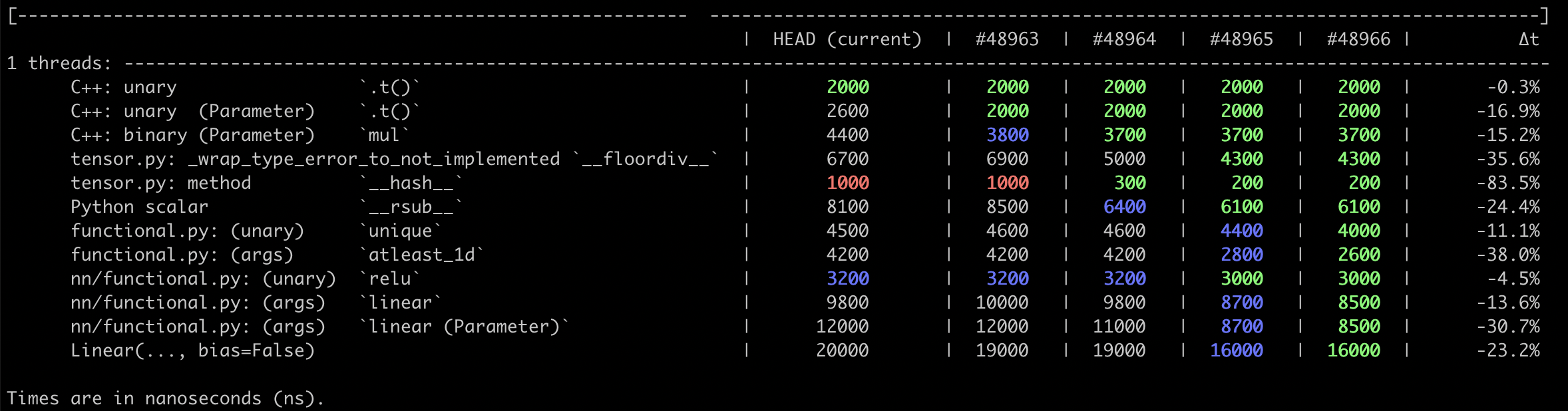
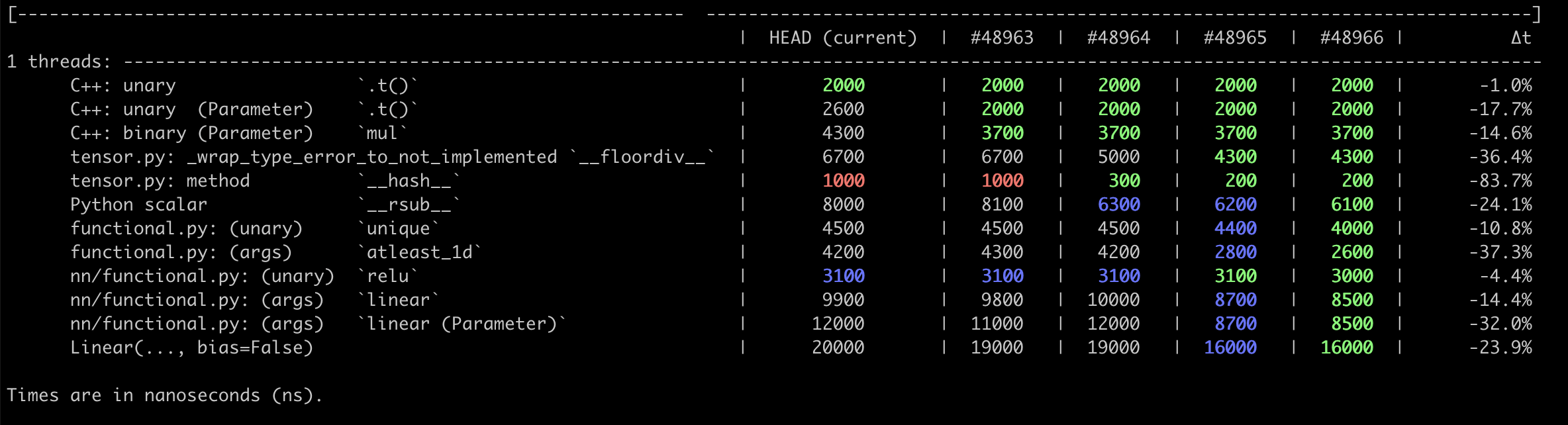
Pull Request resolved: https://github.com/pytorch/pytorch/pull/48965

This PR pulls `__torch_function__` checking entirely into C++, and adds a special `object_has_torch_function` method for ops which only have one arg as this lets us skip tuple construction and unpacking. We can now also do away with the Python side fast bailout for `Tensor` (e.g. `if any(type(t) is not Tensor for t in tensors) and has_torch_function(tensors)`) because they're actually slower than checking with the Python C API.

Test Plan: Existing unit tests. Benchmarks are in #48966

Reviewed By: ezyang

Differential Revision: D25590732

Pulled By: robieta

fbshipit-source-id: 6bd74788f06cdd673f3a2db898143d18c577eb42
Summary:
Fixes https://github.com/pytorch/pytorch/issues/47979

For MHA module, it is preferred to use the combined weight branch as much as possible when query/key/value are same (in case of same values by `torch.equal` or exactly same object by `is` ops). This PR will enable the faster branch when a single object with `nan` is passed to MHA.

For the background knowledge
```
import torch
a = torch.tensor([float('NaN'), 1, float('NaN'), 2, 3])
print(a is a) # True
print(torch.equal(a, a)) # False
```

Pull Request resolved: https://github.com/pytorch/pytorch/pull/48126

Reviewed By: gchanan

Differential Revision: D25042082

Pulled By: zhangguanheng66

fbshipit-source-id: 6bb17a520e176ddbb326ddf30ee091a84fcbbf27
Summary:
Pull Request resolved: https://github.com/pytorch/pytorch/pull/46758

It's in general helpful to support int32 indices and offsets, especially when such tensors are large and need to be transferred to accelerator backends. Since it may not be very useful to support the combination of int32 indices and int64 offsets, here we enforce that these two must have the same type.

Test Plan: unit tests

Reviewed By: ngimel

Differential Revision: D24470808

fbshipit-source-id: 94b8a1d0b7fc9fe3d128247aa042c04d7c227f0b
Summary:
Fix https://github.com/pytorch/pytorch/issues/44601

I added bicubic grid sampler in both cpu and cuda side, but haven't in AVX2

There is a [colab notebook](https://colab.research.google.com/drive/1mIh6TLLj5WWM_NcmKDRvY5Gltbb781oU?usp=sharing) show some test results. The notebook use bilinear for test, since I could only use distributed version of pytorch in it. You could just download it and modify the `mode_torch=bicubic` to show the results.

There are some duplicate code about getting and setting values, since the helper function used in bilinear at first clip the coordinate beyond boundary, and then get or set the value. However, in bicubic, there are more points should be consider. I could refactor that part after making sure the overall calculation are correct.

Thanks

Pull Request resolved: https://github.com/pytorch/pytorch/pull/44780

Reviewed By: mrshenli

Differential Revision: D24681114

Pulled By: mruberry

fbshipit-source-id: d39c8715e2093a5a5906cb0ef040d62bde578567
Summary:
Many of our functions contain same warnings about results reproducibility. Make them use common template.

Pull Request resolved: https://github.com/pytorch/pytorch/pull/45748

Reviewed By: colesbury

Differential Revision: D24089114

Pulled By: ngimel

fbshipit-source-id: e6aa4ce6082f6e0f4ce2713c2bf1864ee1c3712a
Summary:
Pull Request resolved: https://github.com/pytorch/pytorch/pull/44433

Not entirely sure why, but changing the type of beta from `float` to `double in autocast_mode.cpp and FunctionsManual.h fixes my compiler errors, failing instead at link time

fixing some type errors, updated fn signature in a few more files

removing my usage of Scalar, making beta a double everywhere instead

Test Plan: Imported from OSS

Reviewed By: mrshenli

Differential Revision: D23636720

Pulled By: bdhirsh

fbshipit-source-id: caea2a1f8dd72b3b5fd1d72dd886b2fcd690af6d
Summary:
Pull Request resolved: https://github.com/pytorch/pytorch/pull/43680

As discussed [here](https://github.com/pytorch/pytorch/issues/43342),
adding in a Python-only implementation of the triplet-margin loss that takes a
custom distance function.  Still discussing whether this is necessary to add to
PyTorch Core.

Test Plan:
python test/run_tests.py

Imported from OSS

Reviewed By: albanD

Differential Revision: D23363898

fbshipit-source-id: 1cafc05abecdbe7812b41deaa1e50ea11239d0cb
Summary:
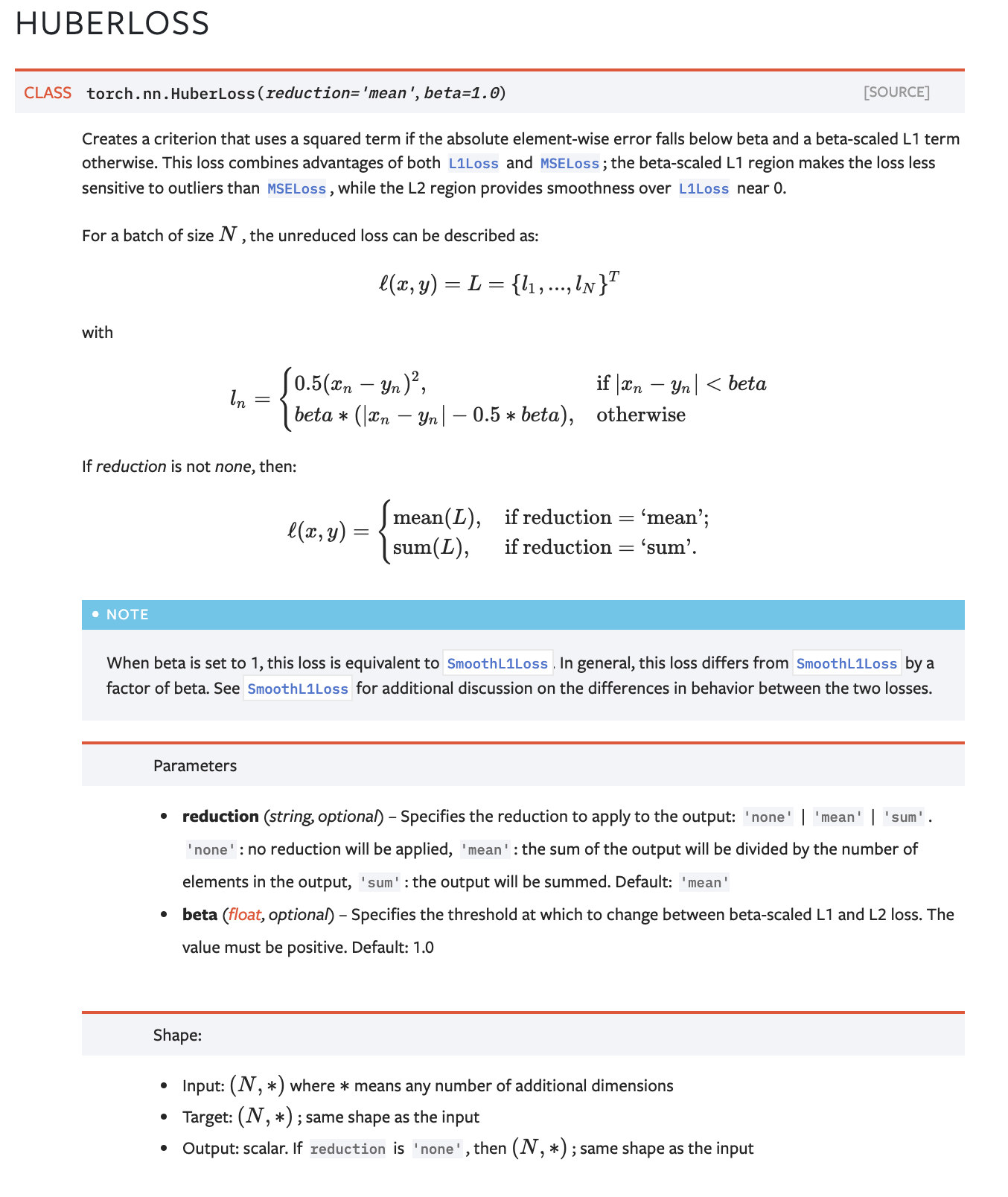
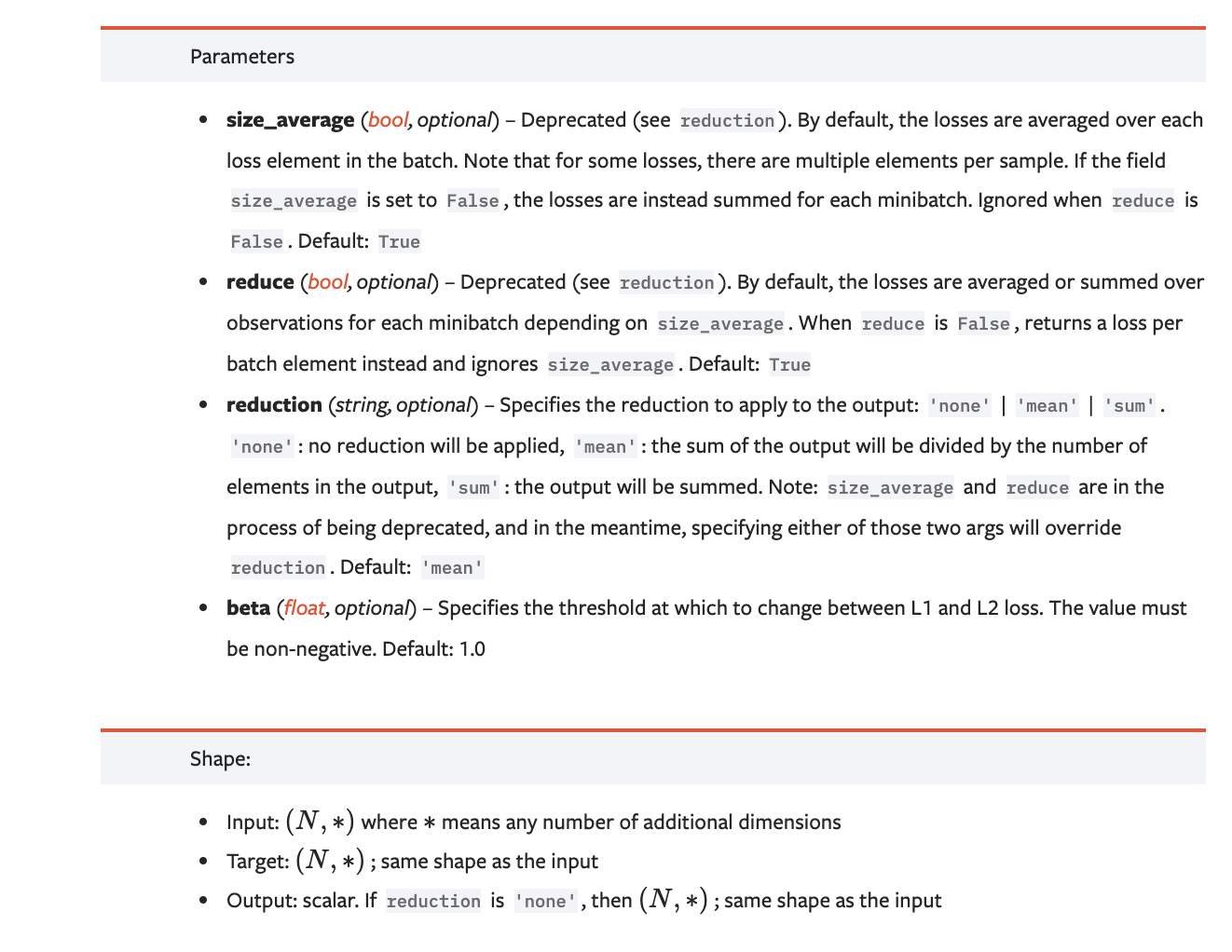
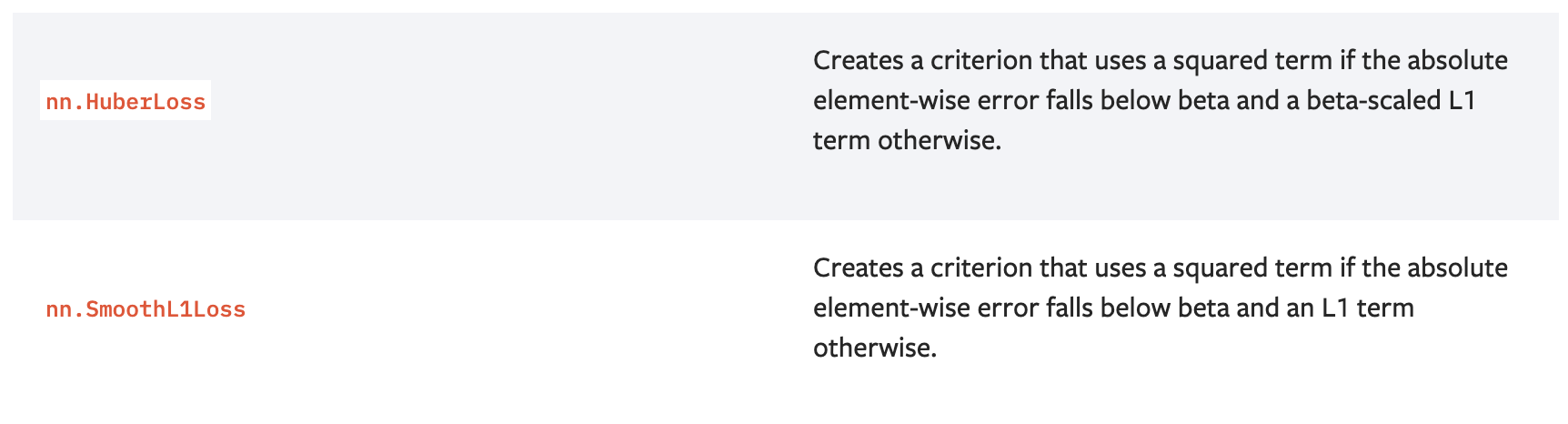
Pull Request resolved: https://github.com/pytorch/pytorch/pull/44486

SmoothL1Loss had a completely different (and incorrect, see #43228) path when target.requires_grad was True.

This PR does the following:

1) adds derivative support for target via the normal derivatives.yaml route
2) kill the different (and incorrect) path for when target.requires_grad was True
3) modify the SmoothL1Loss CriterionTests to verify that the target derivative is checked.

Test Plan: Imported from OSS

Reviewed By: albanD

Differential Revision: D23630699

Pulled By: gchanan

fbshipit-source-id: 0f94d1a928002122d6b6875182867618e713a917
Summary:
Pull Request resolved: https://github.com/pytorch/pytorch/pull/43025

- Use new overloads that better reflect the arguments to interpolate.
- More uniform interface for upsample ops allows simplifying the Python code.
- Also reorder overloads in native_functions.yaml to give them priority.

Pull Request resolved: https://github.com/pytorch/pytorch/pull/37177

ghstack-source-id: 106938111

Test Plan:
test_nn has pretty good coverage.

Relying on CI for ONNX, etc.

Didn't test FC because this change is *not* forward compatible.

To ensure backwards compatibility, I ran this code before this change

```python
def test_func(arg):
    interp = torch.nn.functional.interpolate
    with_size = interp(arg, size=(16,16))
    with_scale = interp(arg, scale_factor=[2.1, 2.2], recompute_scale_factor=False)
    with_compute = interp(arg, scale_factor=[2.1, 2.2])
    return (with_size, with_scale, with_compute)

traced_func = torch.jit.trace(test_func, torch.randn(1,1,1,1))

sample = torch.randn(1, 3, 7, 7)
output = traced_func(sample)

assert not torch.allclose(output[1], output[2])

torch.jit.save(traced_func, "model.pt")
torch.save((sample, output), "data.pt")
```

then this code after this change

```python
model = torch.jit.load("model.pt")
sample, golden = torch.load("data.pt")
result = model(sample)
for r, g in zip(result, golden):
    assert torch.allclose(r, g)
```

Reviewed By: AshkanAliabadi

Differential Revision: D21209991

fbshipit-source-id: 5b2ebb7c3ed76947361fe532d1dbdd6faa3544c8
Summary:
Pull Request resolved: https://github.com/pytorch/pytorch/pull/44471

L1Loss had a completely different (and incorrect, see #43228) path when target.requires_grad was True.

This PR does the following:

1) adds derivative support for target via the normal derivatives.yaml route
2) kill the different (and incorrect) path for when target.requires_grad was True
3) modify the L1Loss CriterionTests to verify that the target derivative is checked.

Test Plan: Imported from OSS

Reviewed By: albanD

Differential Revision: D23626008

Pulled By: gchanan

fbshipit-source-id: 2828be16b56b8dabe114962223d71b0e9a85f0f5
Summary:
Pull Request resolved: https://github.com/pytorch/pytorch/pull/44437

MSELoss had a completely different (and incorrect, see https://github.com/pytorch/pytorch/issues/43228) path when target.requires_grad was True.

This PR does the following:
1) adds derivative support for target via the normal derivatives.yaml route
2) kill the different (and incorrect) path for when target.requires_grad was True
3) modify the MSELoss CriterionTests to verify that the target derivative is checked.

TODO:
1) do we still need check_criterion_jacobian when we run grad/gradgrad checks?
2) ensure the Module tests check when target.requires_grad
3) do we actually test when reduction='none' and reduction='mean'?

Test Plan: Imported from OSS

Reviewed By: albanD

Differential Revision: D23612166

Pulled By: gchanan

fbshipit-source-id: 4f74d38d8a81063c74e002e07fbb7837b2172a10